As one of the most climate-vulnerable countries and heavily dependent on the Indus River system for agriculture, Pakistan faces growing risks from rising temperatures, shifting precipitation, and increasing seasonal variability in snow and glacier melt. Modelling of climate change scenarios indicates that, under a business-as-usual pathway, these pressures will pose serious threats to farmer livelihoods and the wider agricultural sector. Reliable, transparent, and sector-disaggregated information on where water comes from, how it is stored, and how it is consumed is essential for shifting the basin toward a more resilient and sustainable water management pathway.

With support from FAO, the project will develop a water accounting system that maximizes the use of satellite remote sensing, complemented by in-situ data for inputs and validation. The work covers four key outputs:

  1. Critically reviewing existing draft water accounting reports and training materials produced by stakeholders, identifying gaps in methodology and datasets
  2. Developing a holistic WA methodology that accounts for available water resources, changes in storage, outflows, water use, and demand across agricultural, industrial, domestic, and environmental sectors
  3. Building a calibrated and validated water accounting system of models and codes, based on free and open-source software, capable of generating water accounting results for the Indus Basin and two provinces
  4. Producing water accounting reports for the Indus Basin, Punjab, and Sindh, including historical supply-demand gaps, water balances, and spatial distribution maps.

To ensure the system is sustainable and locally owned, FutureWater will deliver comprehensive hands-on training to government officials, enabling them not only to run the models but also to understand the underlying theory and modify the system in the future. By integrating advanced hydrological modelling, energy-based evapotranspiration estimation, and the latest land use classification, the resulting water accounting system will provide the Government of Pakistan with a powerful, replicable tool to support climate-resilient agriculture and water management across the Indus Basin.
FutureWater had previously tailored the REWEFe toolkit to the regional WEFE Nexus context and demonstrated its application for selected river basins. Building on this work, the April 2026 training aimed to strengthen regional capacity for using REWEFe as a decision-support instrument within basin planning and governance processes. Participants included representatives from national and local governments, IRBM Learning Centers, partner universities, and national coordinators from the participating ASEAN Member States.
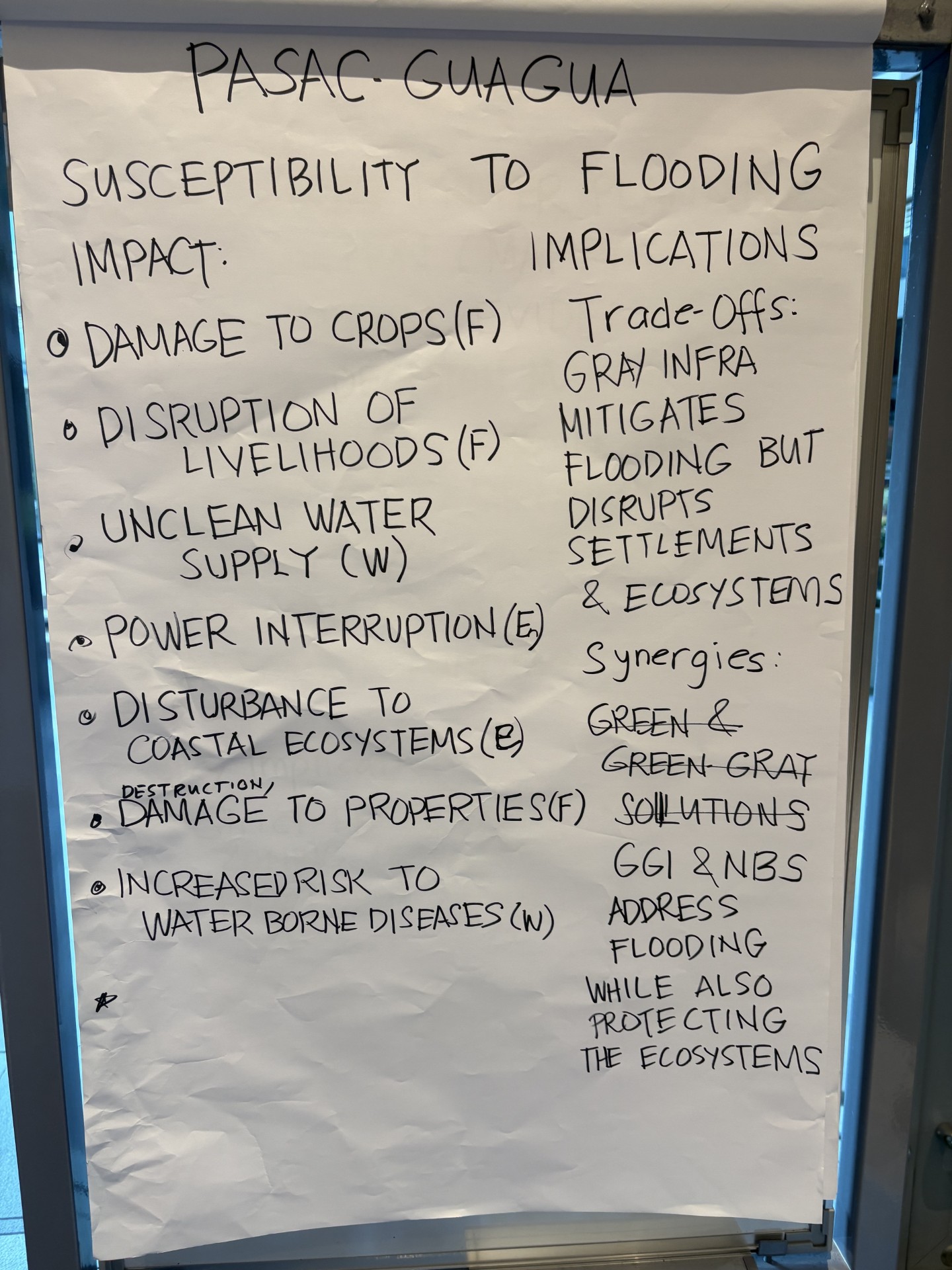
The training combined technical and governance-oriented learning. FutureWater introduced the structure, data requirements, scenario setup, and interpretation of the REWEFe toolkit, while guiding participants through hands-on exercises to analyse baseline conditions, develop scenarios, and interpret WEFE-related synergies and trade-offs. The sessions placed strong emphasis on translating policy plans and sector strategies into structured quantitative scenarios, enabling participants to better connect analytical outputs with planning, investment, and policy dialogue.

The governance component was delivered in collaboration with Dipankar Aich, who contributed expertise on IRBM governance, WEFE Nexus thinking, cross-sector coordination, and the science–policy interface. His sessions supported participants in understanding how REWEFe outputs can be positioned within governance processes, policy dialogues, and decision-making cycles.

Through this assignment, FutureWater contributed to strengthening the practical uptake of REWEFe in Southeast Asia by linking technical modelling, scenario analysis, and governance processes. The training supported participants in using the toolkit not only as an analytical model, but also as a structured approach for dialogue on water, energy, food, and ecosystem trade-offs in river basin planning.

In the highlands of Karuzi Province, Burundi, smallholder farmers are increasingly exposed to prolonged dry spells, erratic rainfall, and fragile water-sharing arrangements between neighbouring cooperatives. Scarce and contested water resources not only undermine agricultural productivity, but also place a disproportionate burden on women and girls and have repeatedly given rise to disputes over access to springs and irrigation supplies. The Digital Peace Water (DPW) project addresses this dual challenge of climate stress and social tension by combining climate-resilient water infrastructure with transparent, data-driven governance.

DPW is a Climate Technology Centre and Network (CTCN) Technical Assistance under the UNEP-managed AFCIA programme. The project is implemented by a consortium led by Zephyr Consulting, together with FutureWater, sensors.AFRICA (Code for Africa) and the Burundian NGO APRN/BEPB. It deploys solar-powered groundwater pumping, centralized storage and a network of IoT sensors, linked to a community-accessible dashboard that supports adaptive water allocation. By making water availability and use visible to all parties, the system is designed to reduce competition over shared resources, build trust between cooperatives, and serve as a replicable model for climate-resilient, conflict-sensitive water management in the region.

FutureWater contributes the hydrological and agronomic backbone of the system. Building on its experience with Croptimal, the satellite-based irrigation advisory service deployed in Rwanda, Zambia, Ghana and Egypt, FutureWater develops the allocation logic that translates groundwater levels, storage status, rainfall forecasts and crop water demand into operational decisions on the DPW dashboard. This includes defining the threshold-based regimes that govern abstraction under normal and dry-season conditions, peer-reviewing the hydraulic design of the borehole-and-tank systems, and analysing climate and hydrological data to inform sustainable pumping rates and storage sizing. FutureWater also supports the climate risk assessment for the pilot sites and the design of the dry-season scenarios that will be evaluated during implementation.

A second strand of FutureWater’s contribution is capacity building. In close cooperation with APRN/BEPB and the local Water Management Committees, FutureWater delivers training on data interpretation, water planning and the use of the DPW dashboard, ensuring that cooperative members, women- and youth-led groups, and local authorities can independently operate the system beyond the project duration. The pilot phase will be implemented at three sites in Karuzi, representing different hydrogeological and landscape conditions, with the explicit ambition of providing a blueprint for scale-up across Burundi and comparable contexts.

The assessment provided a structured analysis of present and future climate risks for the wider water supply system and for key infrastructure components, including water treatment plants, transmission mains, water distribution centres, smart water management systems and laboratory and IT facilities. Particular attention was given to the Kampyrravat water treatment plant and associated transmission infrastructure in Andijan, the Kungrad–Muynak transmission main, and the Tuyamuyun water treatment plant in Karakalpakstan. The work also considered the role of improved monitoring, telemetry, SCADA systems and district metered areas in strengthening operational resilience under increasing climatic variability.

FutureWater analysed climate hazards relevant to the project area, including floods, heatwaves, drought and water scarcity, rainfall-induced landslides, wildfires, groundwater salinization and seismic risks. The assessment combined climate index analysis with component-level exposure and vulnerability screening to identify how projected changes in temperature, precipitation extremes, consecutive dry days and long-term runoff seasonality could affect water availability, treatment performance, infrastructure reliability and service continuity.

The results were used to define and justify climate adaptation measures within the project design. These include flood-resilient siting and drainage improvements, heat-resilient materials and protection of exposed infrastructure, erosion protection along pipeline corridors, additional storage and operational measures for drought periods, improved water quality monitoring, and smart water management systems to reduce non-revenue water and support rapid response during climate-related disruptions. The assessment also contributed to the project’s climate finance justification, including the identification of adaptation-relevant investments in line with ADB and multilateral development bank guidance.

Through this work, FutureWater helped strengthen the climate rationale of a major water sector investment in Uzbekistan. The assessment supports the development of more reliable, efficient and climate-resilient drinking water services for communities in Andijan, Ferghana and Karakalpakstan, while contributing to long-term water security under increasing climate stress.

From 21 to 24 April 2026, FutureWater delivered a regional training in Manila, Philippines, on the application of the REWEFe toolkit and the Water–Energy–Food–Ecosystem (WEFE) Nexus in the context of Integrated River Basin Management (IRBM). The training brought together

 Representatives from ASEAN Member States, including national and local government partners, IRBM Learning Centers, partner universities, and national coordinators from Cambodia, Indonesia, Lao PDR, Malaysia, the Philippines, and Viet Nam.

The training was organised under the GEF/UNDP/ASEAN project on Reducing Pollution and Preserving Environmental Flows in the East Asian Seas, implemented through IRBM in ASEAN countries. The project supports improved river basin governance, reduced pollution, sustained environmental flows, and climate resilience in priority river basins across Southeast Asia.

During the four-day programme, participants were introduced to the REWEFe toolkit, which was tailored by FutureWater to support WEFE Nexus analysis in the regional context in 2024-2025. The training combined lectures, interactive discussions, and hands-on exercises. Participants explored how policy plans and sector strategies can be translated into structured scenarios, how the REWEFe tool can be used to analyse baseline conditions and future developments, and how results can inform discussions on trade-offs and synergies between water, energy, food, and ecosystem priorities.

A key element of the training was the connection between technical analysis and governance. FutureWater worked closely with Dipankar Aich, governance expert, who led sessions on IRBM governance, WEFE Nexus thinking, cross-sector coordination, and the science–policy interface. B oth trainers facilitated breakout sessions and policy-oriented exercises to help participants reflect on how REWEFe outputs can support policy dialogue, planning processes, and decision-making at river basin level.

The visit provided an opportunity to strengthen regional capacity for applying WEFE Nexus approaches in practice. By combining technical modelling with governance-oriented dialogue, the training supported participants in understanding not only how REWEFe works, but also when and how it can be used as a decision-support instrument within IRBM processes.

Interactive discussion topics

 In early March 2026, the FutureWater team travelled to Karuzi Province in central Burundi as part of the inception phase of the Digital Peace Water (DPW) project. The mission was a key step in establishing the technical, institutional and social baseline against which the project will be implemented and evaluated.

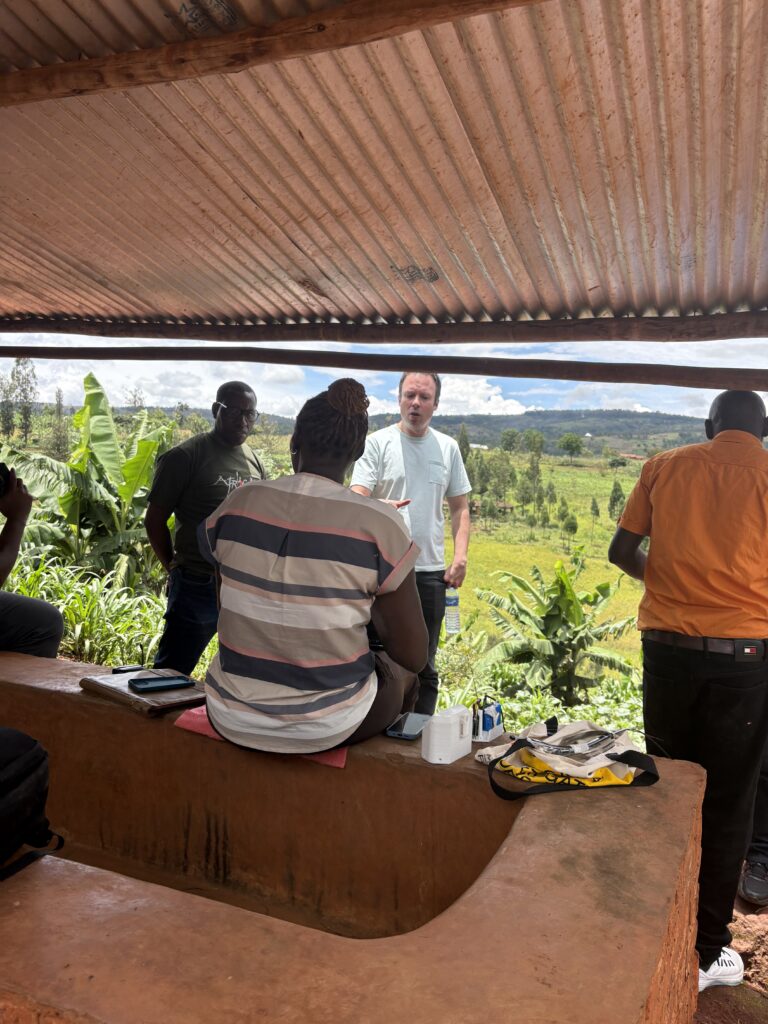
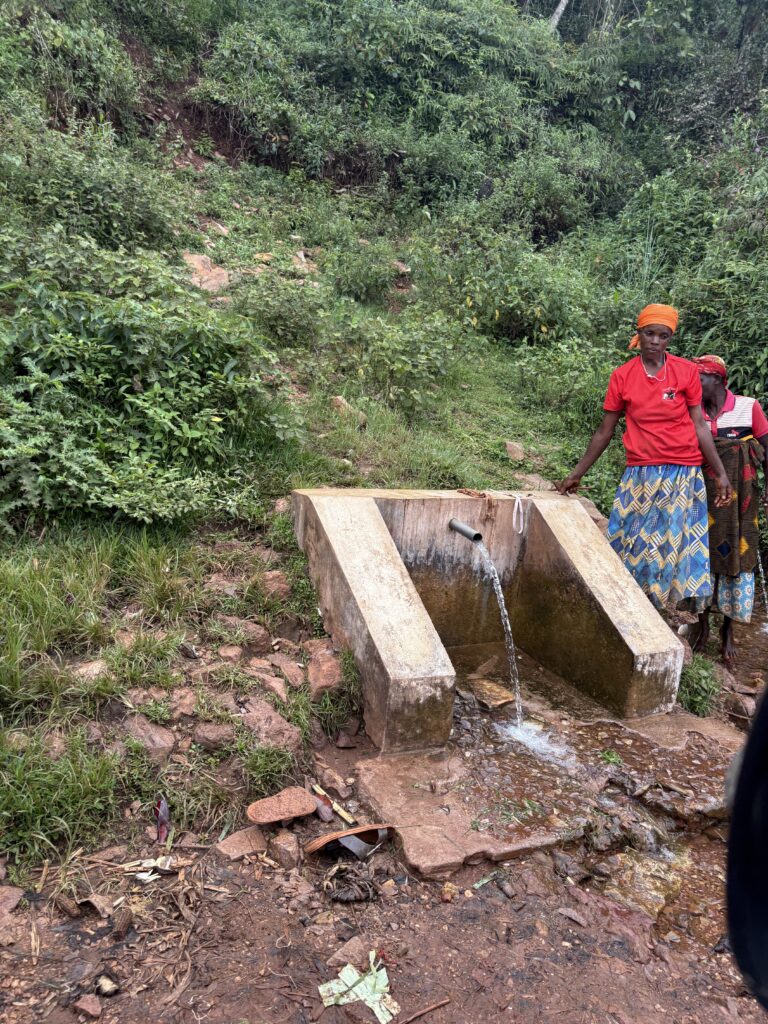
During the mission, the team visited several candidate pilot sites and inventoried the local water resources, including a number of springs that currently supply households and cooperatives in the area. These site visits provided first-hand insight into the hydrogeological conditions of the hill (flank) systems characteristic of the region, the layout of cultivated land, and the existing arrangements through which farmers access water during the dry season. Together with the consortium partners, the team also engaged with two community-based financial institutions, a Women’s Bank and a Youth Bank, to discuss inclusive access to water-related investments and the role these institutions can play in the long-term financial sustainability of the DPW system. Additionally, the visit included consultations with several Burundian ministries to align the project with national priorities and to clarify institutional roles for the deployment of the DPW system. These discussions confirmed the relevance of the project under Burundi’s NAPA and NDC priorities for water and agriculture, and helped further define the scope of the CTCN-supported Technical Assistance.

Based on the field observations, stakeholder consultations and resource inventory, the consortium has now defined a clear baseline for the implementation of DPW in Karuzi. The next steps include the selection of three pilot sites, the procurement of solar-powered groundwater pumping infrastructure,  the design of allocation regime, and  the deployment of the IoT and dashboard components that will support adaptive, transparent water allocation among the participating cooperatives.

Field visit and discussion
Water system in the region

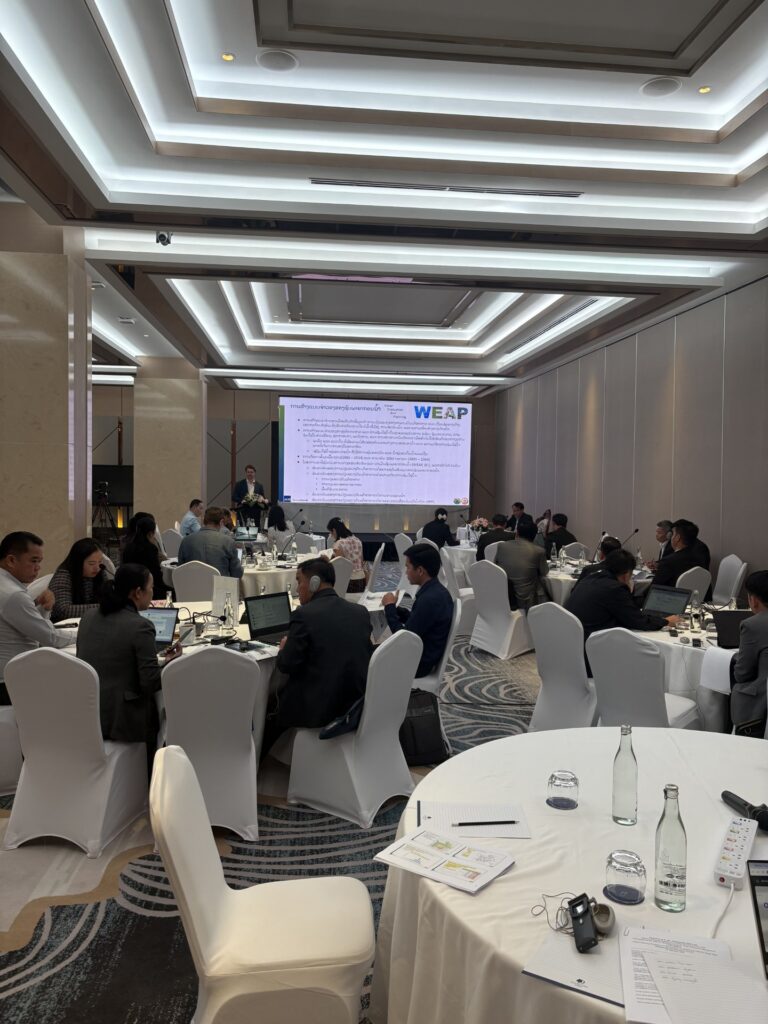
In February 2026, FutureWater supported the Climate Risk and Adaptation Assessment validation mission for Lao PDR under the Asian Development Bank’s Climate Adaptation Investment Planning Technical Assistance. As part of this mission, Brecht D’Haeyer and Tijmen Schults delivered and facilitated technical sessions during a validation workshop in Vientiane, focused on the Climate Risk and Adaptation Assessments for the Nam Xedon and Nam Neun river basins.

The workshop brought together relevant national stakeholders and external partners to review and validate the draft assessment results. Participants included representatives from the Department of Water Resources, Department of Meteorology and Hydrology, Department of Environment, Department of Irrigation, Department of Watershed Management, the Ministry of Finance, the Ministry of Health, academic institutions, and several development partners. In total, 49 participants joined the workshop.

The validation focused on three core components of the Climate Risk and Adaptation Assessment: climate risk mapping, WEAP-based climate impact modelling, and Nature-based Solutions opportunity mapping. These components provide the technical basis for understanding climate-related risks, assessing water allocation and demand sensitivities, and identifying spatial opportunities for adaptation measures in both basins.

During the workshop, FutureWater presented key findings on climate hazards, exposure, vulnerability, water availability and potential Nature-based Solutions. The sessions were designed to test the plausibility of the results, discuss uncertainties and limitations, and capture feedback from national experts and development partners. This validation step was important to ensure that the assessment reflects local knowledge and can support practical decision-making in the next phase of the CAIP process.

The workshop concluded with an initial discussion on adaptation recommendations for Nam Xedon and Nam Neun. These recommendations will help guide the development of the Climate Adaptation Investment Plan, with a focus on evidence-based, basin-level adaptation planning and investments that strengthen climate resilience in Lao PDR.

Training venue

ADB is committed to supporting its developing member countries in scaling up climate action. As part of this commitment, ADB is implementing TA 10098-REG: Bridging the Gap between Climate Adaptation Planning and Financing, also known as the Climate Adaptation Investment Planning (CAIP) TA. The CAIP TA aims to enhance the capacity of developing member countries (DMCs), to identify climate adaptation investment priorities to catalyze financing for adaptation and resilience. The TA delivers three outputs: (i) climate adaptation investment plans developed; (ii) appraisal of climate adaptation projects improved; and (iii) regional knowledge on climate adaptation investment planning strengthened.

The CAIP TA applies a five-step process for climate adaptation investment planning: (i) reviewing country and sector context, including national development plans and strategies, climate policies including the National Adaptation Plan (NAP), Nationally Determined Contribution (NDC), or equivalent adaptation plans; (ii) undertaking more granular climate diagnostic for selected national adaptation priorities; (iii) prioritizing adaptation investments; (iv) linking with public financial management systems; and (v) identifying appropriate financing opportunities.  The CAIP TA brings together different relevant ministries, especially the finance and planning ministry, the respective sector ministry, and the environment ministry. In addition, the implementation process closely collaborates with relevant development partners active in the adaptation space in the country, the private sector, and civil society organizations.

FutureWater was engaged by ADB to develop the climate adaptation investment plans and underlying Climate Risk and Adaptation assessments (CRAs) for selected river basins in Lao PDR and Timor-Leste. Both the CRAs and the investment plans are approached from a multi-sector perspective and strongly adhere to IWRM principles. Water resources modelling (WEAP) is employed to relate water supply and demands in an integrated framework under different scenarios, in addition to extensive mapping of climate hazards, exposure and vulnerability across the study areas, making use of a combination of state-of-the-art global data and tools and locally-sourced information. The investment plans involve mapping and assessment of current and planned investments within the river basins, including nature-based solutions and green-gray infrastructure, followed by an identification of adaptation opportunities and subsequent prioritization. The results of the CAIP process for Lao PDR and Timor-Leste are expected to support the country’s national adaptation priorities into concrete, investment-ready plans and securing the necessary funding for their implementation.

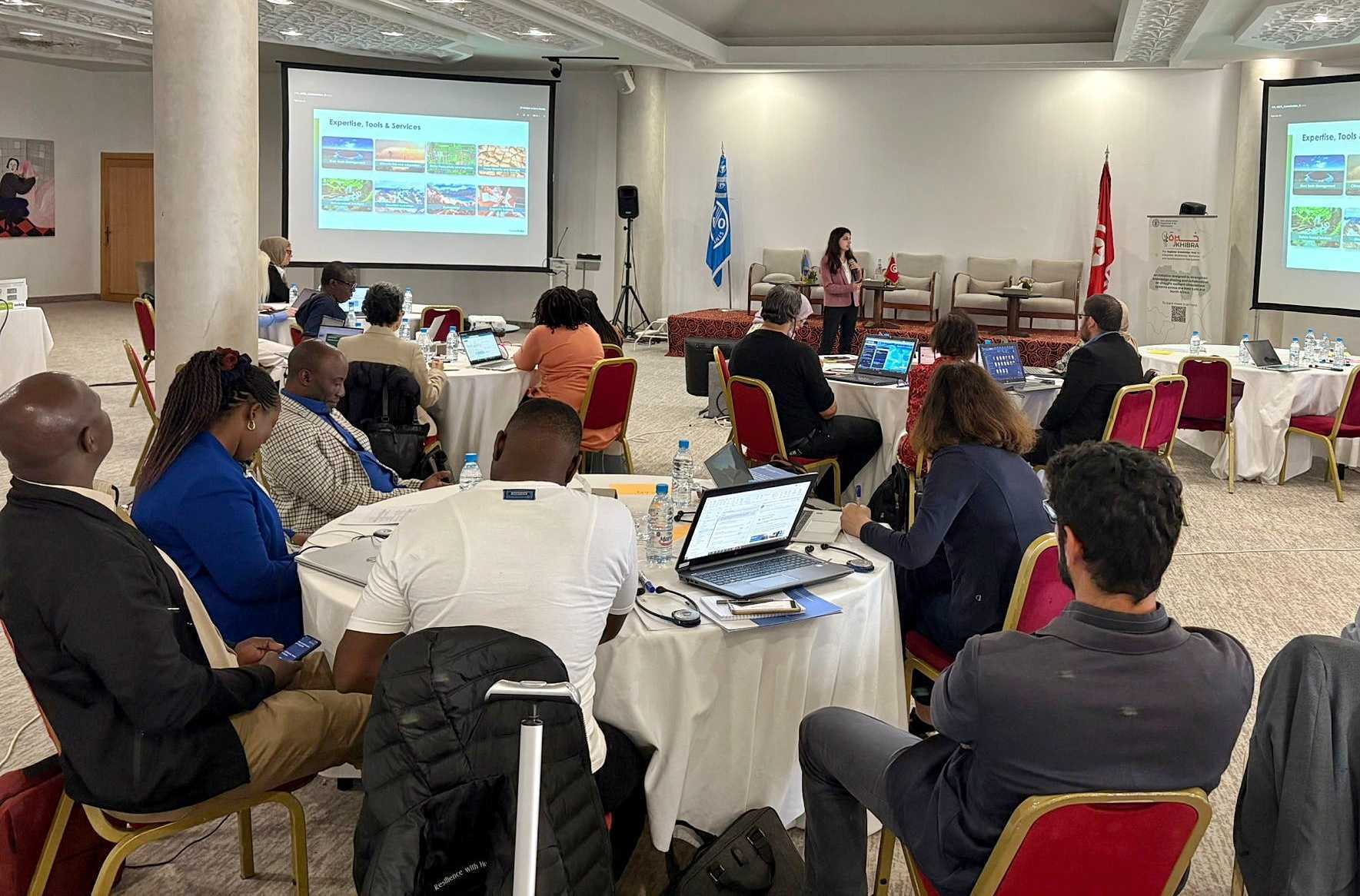
FutureWater, together with FAO’s regional office for the Middle East and North Africa, presented the blueprint of a new decision support tool at the FAO inter-regional workshop on “Integrated approaches and evidence-based good practices in sustainable land management to promote integration of the WEFE nexus”. The tool is designed to use water accounting data to assess and balance sectoral use and resource demand within the water-energy-food-ecosystem (WEFE) nexus.

The workshop, organised by FAO’s Interregional Technical Platform on Water Scarcity (iRTP), was attended by experts from MENA and sub-Saharan Africa, including Yemen, Malawi, Egypt, Jordan, Algeria, Morocco, Tunisia, Botswana, Zimbabwe and Tanzania. This diverse meeting created a valuable space for cross-regional exchange on best practices in sustainable land and water management.

FutureWater’s presentation highlighted how the tool, currently under development, aims to support evidence-based planning and resource allocation in competing sectors. The new initiative builds on previous work under FAO’s Asia-Pacific Water Scarcity Programme and brings forward a systems approach to integrated resource management.

It was particularly encouraging to receive strong interest from several countries to test the tool, reinforcing the urgent need for scalable, data-driven solutions that can support sustainable development in water-scarce regions.

FutureWater is proud to contribute to promoting integrated approaches to land and water management and looks forward to the next stages of development and pilot testing.