Since gaining independence in 2002, Timor-Leste has made significant gains in peacebuilding, governance, and infrastructure with goals to achieve upper-middle income status by 2030 as laid out in its Strategy Development Plan (SDP) for 2011-2030, which places agriculture at its core. However, challenges in Timor-Leste persist, particularly with food security.
The Ministry for Agriculture, Livestock, Fisheries and Forestry (MALFF) has developed its own goal under the national SDP to “improve national food security, reduce rural poverty, support the transition from subsistence livelihoods to the commercial production of food crops, livestock, fisheries, forestry and industrial crops; and promote environmental sustainability and conservation of Timor-Leste’s natural resources.”
Under the project TCP/TIM/390, FAO developed a national assessment report compiling indicators for rice production and value chains and a detailed strategy for strengthening the rice industry for MALFF. To further support the goals of MALFF and strengthen the technical capacity of staff there to conduct remote-sensing-based rice mapping and crop water productivity analyses, FAO has hired FutureWater to develop a remote-sensing-based rice mapping and crop water productivity analysis for national GIS/statistics specialists at MALFF, focusing on two priority irrigation schemes (Bebui and Oebaba). This analysis meets MALFF’s immediate needs on assessing rice area and productivity, and FutureWater will also support MALFF in building capacity to undertake these analyses themselves by developing a step-by-step guide on conducting a crop water productivity assessment.
ADB is committed to supporting its developing member countries in scaling up climate action. As part of this commitment, ADB is implementing TA 10098-REG: Bridging the Gap between Climate Adaptation Planning and Financing, also known as the Climate Adaptation Investment Planning (CAIP) TA. The CAIP TA aims to enhance the capacity of developing member countries (DMCs), to identify climate adaptation investment priorities to catalyze financing for adaptation and resilience. The TA delivers three outputs: (i) climate adaptation investment plans developed; (ii) appraisal of climate adaptation projects improved; and (iii) regional knowledge on climate adaptation investment planning strengthened.
The CAIP TA applies a five-step process for climate adaptation investment planning: (i) reviewing country and sector context, including national development plans and strategies, climate policies including the National Adaptation Plan (NAP), Nationally Determined Contribution (NDC), or equivalent adaptation plans; (ii) undertaking more granular climate diagnostic for selected national adaptation priorities; (iii) prioritizing adaptation investments; (iv) linking with public financial management systems; and (v) identifying appropriate financing opportunities. The CAIP TA brings together different relevant ministries, especially the finance and planning ministry, the respective sector ministry, and the environment ministry. In addition, the implementation process closely collaborates with relevant development partners active in the adaptation space in the country, the private sector, and civil society organizations.
FutureWater was engaged by ADB to develop the climate adaptation investment plans and underlying Climate Risk and Adaptation assessments (CRAs) for selected river basins in Lao PDR and Timor-Leste. Both the CRAs and the investment plans are approached from a multi-sector perspective and strongly adhere to IWRM principles. Water resources modelling (WEAP) is employed to relate water supply and demands in an integrated framework under different scenarios, in addition to extensive mapping of climate hazards, exposure and vulnerability across the study areas, making use of a combination of state-of-the-art global data and tools and locally-sourced information. The investment plans involve mapping and assessment of current and planned investments within the river basins, including nature-based solutions and green-gray infrastructure, followed by an identification of adaptation opportunities and subsequent prioritization. The results of the CAIP process for Lao PDR and Timor-Leste are expected to support the country’s national adaptation priorities into concrete, investment-ready plans and securing the necessary funding for their implementation.
Expected water savings by implementing advanced irrigation technologies have in many cases not been achieved and have even led to higher water consumption by irrigators. This has been to the advantage of farmers concerned (more crop produced), but has been disappointing to planners who were hoping to save water (in fact, making it available for other uses). Ignoring return flows and reuse of water are common reasons for these underperforming water savings projects.
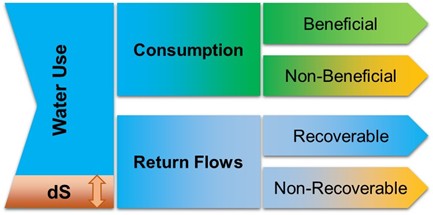
FutureWater and FAO have over the past years worked intensively on this topic, developing and advocating the “Follow the Water” approach. Among others, this culminated in the launch of the Follow the Water (FtW) tool, which was developed to improve the understanding of water flows in irrigation systems by visualizing flows and quantifying reuse of water in a simple and understandable manner.
Now, FAO’s Second Edition of the FutureWater-led report “Reuse of water in agricultural systems – Follow the Water” has been published, which attempts to quantify reuse rates in irrigated agricultural systems. The technical manual of the Follow the Water was recently officially published by FAO as well. Together with the FtW tool, these resources aim to provide conceptual guidance as well as a practical toolkit to agricultural water managers for sound tracking of flows across irrigation systems.
FutureWater is proud to present these new fruits of a long-standing collaboration with FAO, which illustrates our commitment to advancing sustainable and effective agricultural water management worldwide.
The Follow the Water conceptual framework. Source: (Opstal et al., 2021) based on (Perry, 2011).
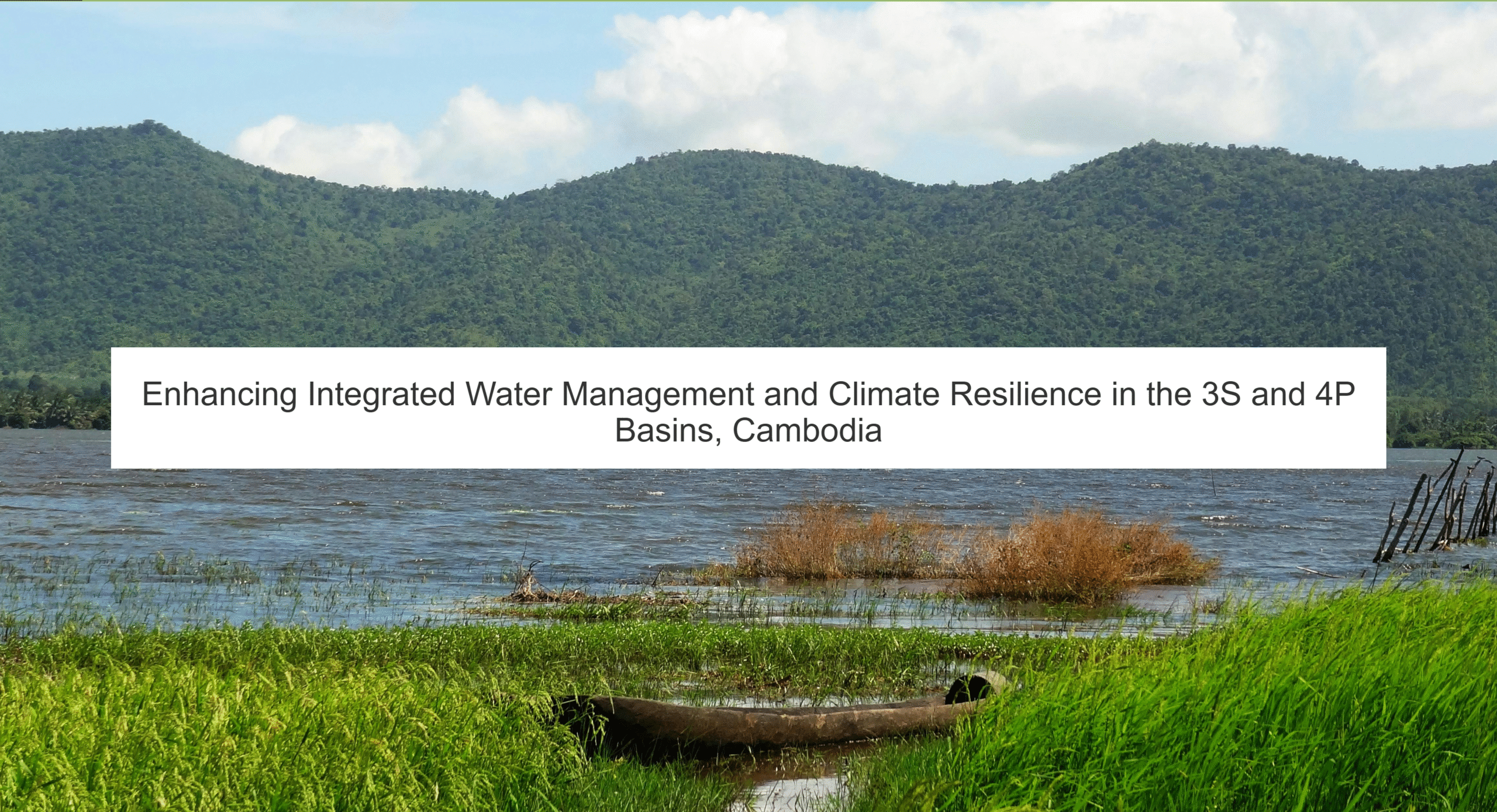
This project is funded by the Ministry of Environment of the Government of Republic of Korea. The main objective is to strengthen the climate and disaster resilience of people and vulnerable communities through improved risk and vulnerability assessment and advancing an integrated approach to water resources management, in both Cambodia and Lao PDR. Focus regions in Cambodia are the 3S and 4P River Basins in the northeast of the country.
FutureWater has been providing technical advisory services throughout the project duration, supporting an improved understanding of water-related climate risks, strengthened technical and institutional capacity and community disaster preparedness, and identification of effective Climate Change Adaptation (CCA) and Disaster Risk Reduction (DRR) options. Activities include an elaborate crop-specific climate risk and vulnerability assessment, co-development of various capacity building initiatives, and support to prioritization of follow-up CCA measures.
A geostory is now published which highlights achievements, results and lessons learned from the various activities implemented in Cambodia under this project. The geostory was developed by FutureWater and merges interactive maps and graphs with explanatory texts. Its purpose is to allow a wider audience to access the project’s main findings and potentially build upon these insights in their own activities.
The geostory can be found here. For further details about the project and FutureWater’s role, please reach out to Gijs Simons.
Since December 2022, FutureWater has supported UNDP with technical expertise to ensure swift and effective implementation of a range of studies, including baseline catchment assessments, flood modeling, climate risk assessments of key agricultural supply chains, and prioritization of climate adaptation and disaster risk reduction measures.
With the final year of the project underway, current activities focus on leveraging the key insights from the project and supporting the development of follow-up funding proposals for implementation-focused projects. As part of this endeavor, a number of meetings with key stakeholders, government institutions and development partners were organized from February 24 – 28, aiming to consolidate the main findings from the project and to move forward with the development of concrete ideas for follow-up work.
By integrating innovative technologies and the knowledge of key stakeholders from commune to national level, the project has generated a wealth of information and tools enabling improved risk and vulnerability assessment and advancing an integrated approach to water resources management. FutureWater will now focus its efforts on ensuring that these new insights will be the foundation of effective adaptation measures, benefiting the 3S and 4P population and their livelihoods. In parallel, we are developing an online story-map (coming soon!) showcasing the main findings and lessons learned from the project to a wider audience.
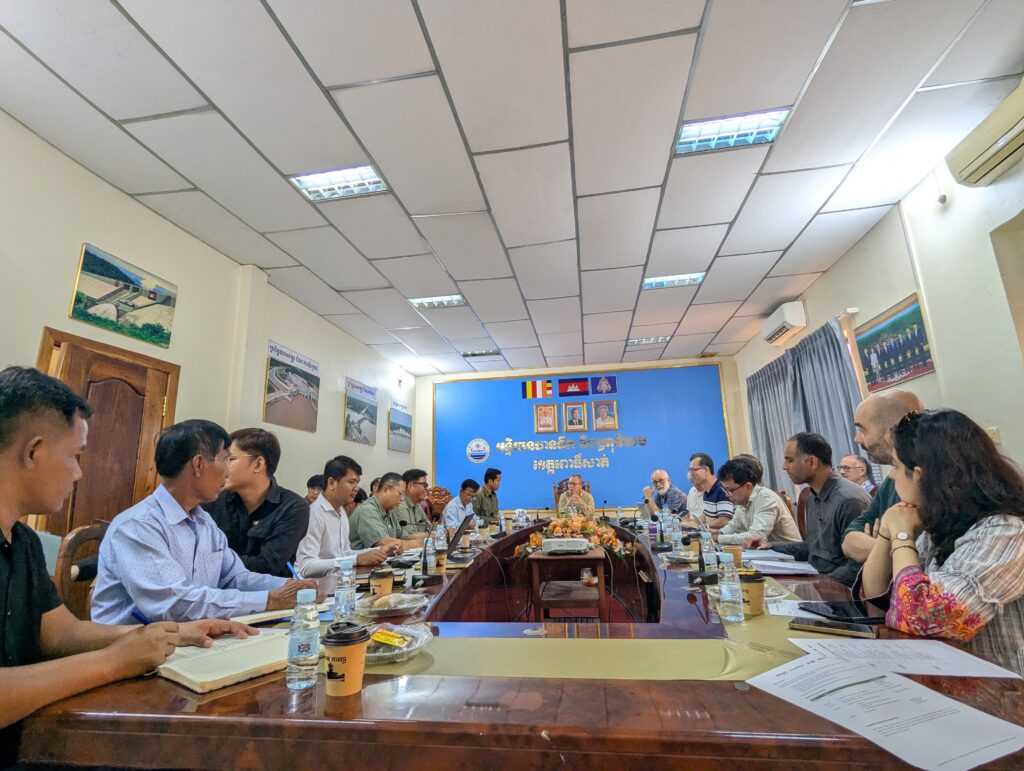
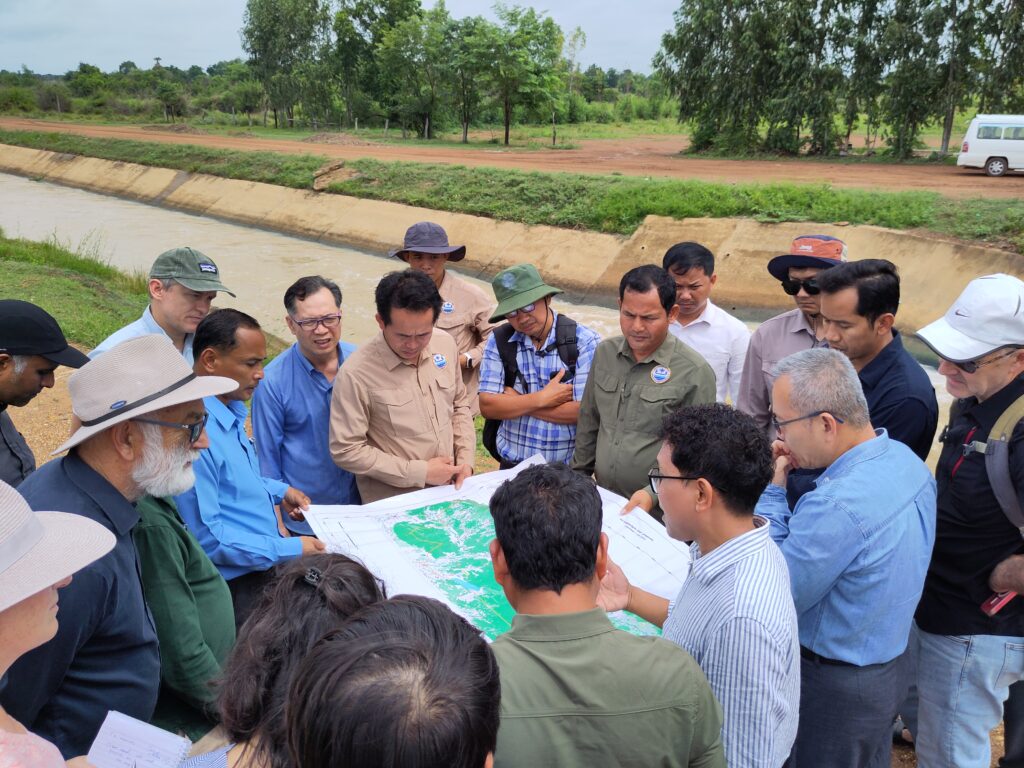
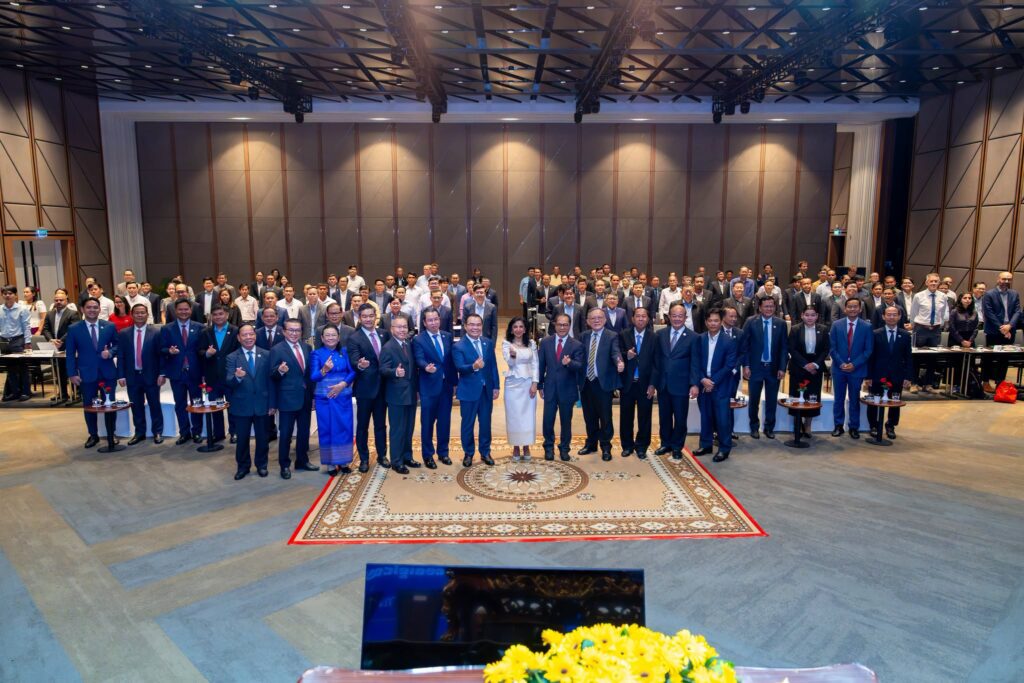
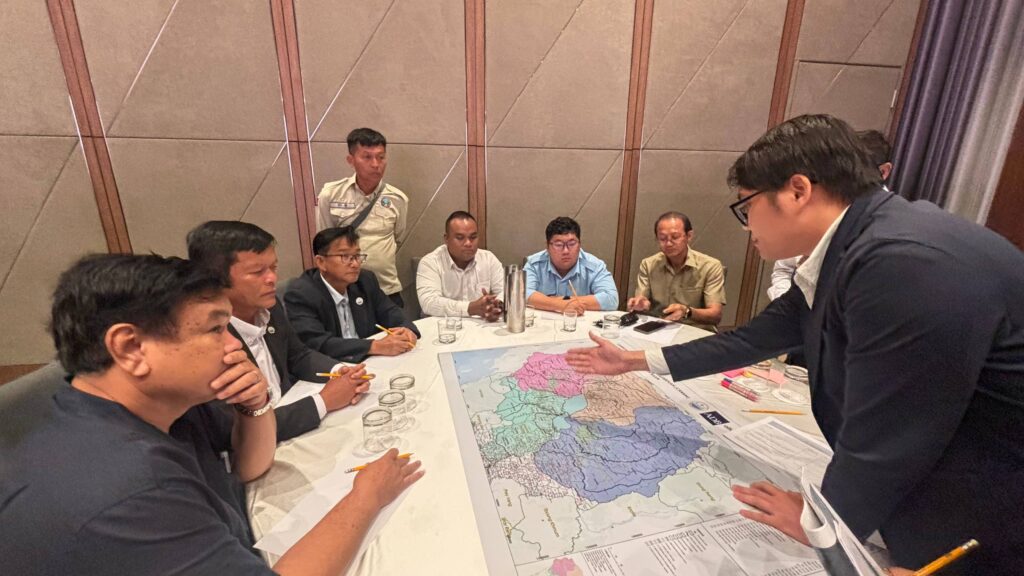
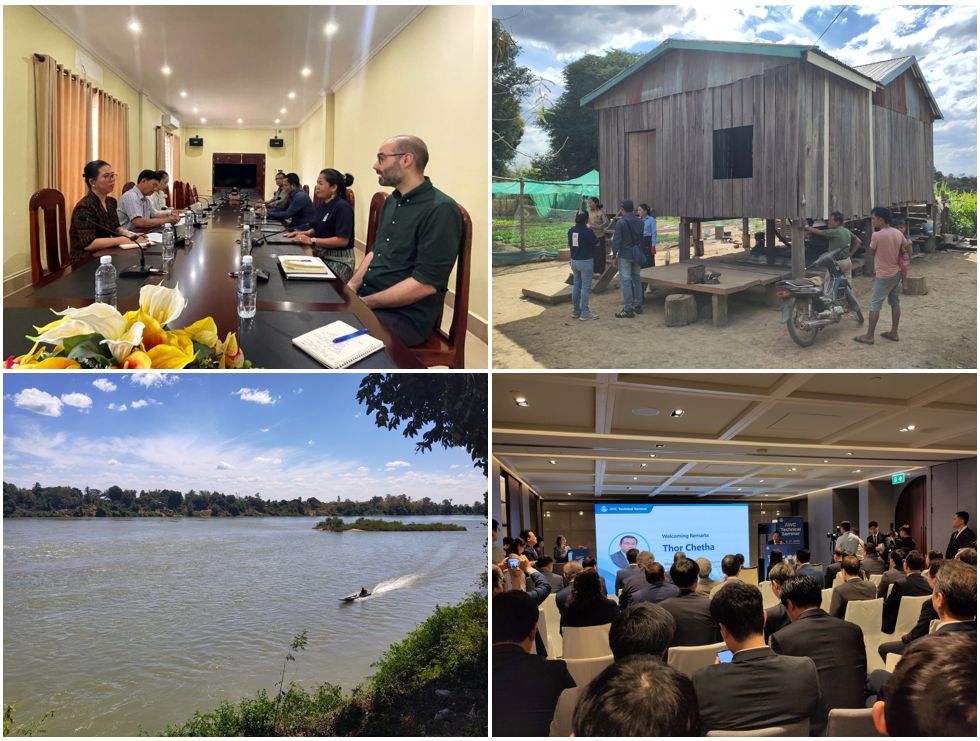
Impressions of field visits and stakeholder meetings in Stung Treng and Kratie Provinces, Cambodia.
0.8-1.0 FTE | Location: Wageningen, The Netherlands | Start date: TBD | Application deadline: 3 March 2025
About the Role
FutureWater is seeking an experienced Senior Hydrologist to support our expanding international project portfolio, particularly in Asia and Africa. In this role, you will work at the interface of consultancy and research, contributing both technically and strategically to our global initiatives.
You will be part of a dynamic and multidisciplinary team, working independently and collaboratively on high-impact projects in the fields of water resources and climate change. The position offers an excellent opportunity to lead innovative hydrological research and applications while managing international partnerships and project execution.
Key Responsibilities
Lead strategic initiatives and analytical work on (mountain) water resources and climate change within international projects.
Provide technical leadership in key areas of FutureWater expertise, such as the development and application of hydrological models and tools for geospatial analyses.
Act as an independent project manager, responsible for project planning, leadership of internal project teams, and coordination with clients and external partners (private sector, NGOs, and academia).
Drive project acquisition in your field of expertise and lead proposal development.
Act as a mentor and knowledge resource for junior and mid-level team members.
Required Qualifications
Master’s or PhD in Hydrology, Water Resources Management, or a related field.
Minimum 10 years of professional experience with increasing autonomy.
Extensive experience in spatial hydrological modeling.
Proven track record in project management and client communication in international projects.
Established network of relevant public and private organizations in the Netherlands and abroad.
Strong proficiency in Python and/or R.
Fluent in English (spoken and written).
Valid work permit for the Netherlands (already obtained).
About FutureWater
FutureWater is an international research and consulting organization dedicated to innovative water management solutions. We operate at global, national, and local levels, addressing challenges in water for food, irrigation, climate change adaptation, and river basin management. Our expertise spans quantitative analysis, simulation modeling, GIS, and satellite data interpretation, enabling data-driven decision-making.
We collaborate with a diverse range of clients and partners, including the World Bank, Asian Development Bank, national and local governments, river basin organizations, universities, and research institutions. With offices in Wageningen (Netherlands) and Cartagena (Spain), we combine global expertise with local insights to create impactful solutions.
Join FutureWater – Where Innovation Meets Impact
At FutureWater, we believe that a strong, dynamic, small and close-knit team is the key to success. Our mission to create a sustainable future is at the heart of everything we do. More than just a team of experts, we are a collective force united by a shared passion for safeguarding one of our planet’s most vital resources: water!
By joining FutureWater, you will have the opportunity to contribute to cutting-edge research and practical solutions in water management. You’ll be part of a close-knit, international community that values professional growth, well-being, and collaboration. We foster an environment where innovation thrives and where every team member feels valued. Our workplace culture is built on camaraderie, creativity, and continuous learning. We regularly organize team activities, an annual company outing of several days, Friday afternoon drinks, and daily joint lunches provided by the company.
Our company outings to Spain in 2023 (left) and to Terschelling in 2024 (right).
What We Offer
A competitive salary and excellent secondary benefits.
Flexible hybrid work arrangements and freedom to shape your work schedule.
A modern working environment with free daily lunch served.
The chance to travel around the world for our international projects, including full travel compensation.
A diverse and collaborative team with opportunities for professional growth.
Regular fun activities, such as our yearly company outing.
Potential for permanent employment based on performance.
Join us in shaping the future of sustainable water management! To apply, send your motivation letter and CV to jobs@futurewater.nl by Monday 3 March 2025. Selected candidates will be notified within a few days after the deadline.
The GEF / UNDP / ASEAN Project on Reducing Pollution and Preserving Environmental Flows in the East Asian Seas through the Implementation of Integrated River Basin Management (IRBM) in the ASEAN Countries is a 5-year project (2023-2027) with the goal of establishing functional IRBM mechanisms in seven priority river basins / sub-basins / watersheds in six ASEAN Member States, to reduce pollution, sustain freshwater environmental flows and adapt to climate change vulnerabilities. The Project is designed to improve governance and management arrangements in IRBM and accelerate the required changes in the six AMS in support of national priorities, objectives and commitments to global sustainable development targets using the Source to Sea (S2S) framework. The PEMSEA Resource Facility (PRF), which serves as the Project Implementing Partner, hosts the Regional Project Management Unit (RPMU). It works in collaboration with National and Local Government Partners and River Basin Organizations.
Component 1 of the Project focuses on the conduct of a baseline assessment of the S2S management continuum with a targeted outcome of improving understanding of governance, socioeconomic, ecological conditions, gaps and needs of priority river basins / sub-basins and coastal areas. This will be achieved through the establishment of the State of River Basin (SORB) reporting system to consolidate information coming from administrative, social, economic and environmental sectors. As an input to the SORB baseline reporting, it is required to complete a comprehensive assessment of competing uses and users of water as a consequence of existing and future water uses and their implications on the water / energy / food / ecosystem (WEFE) security nexus in the priority river basins.
FutureWater is providing this assessment of the WEFE security nexus through review of existing knowledge and literature, stakeholder consultations, as well as tailoring and applying its REWEFe toolkit for nexus analysis to seven river basins in six countries of Southeast Asia: Cambodia, Indonesia, Lao PDR, Malaysia, Philippines and Viet Nam.
The recently published World Bank’s Drought Risk and Resilience Assessment Methodology (DRRA) is a framework for action to support governments proactively address drought risks. Drawing on international best practice in drought management, it outlines practical measures to build resilience at every stage of the drought cycle. With this tool, governments can create a community of stakeholders, target areas for action across sectors, optimize their resources and investments, and minimize future economic losses from drought.
The DRRA publication can be accessed through the World Bank website here. FutureWater is proud to have contributed to the DRRA methodology report by developing factsheets on Nature-based Solutions (NbS) for enhancing drought resilience, highlighting opportunities, limitations and overall critical aspects of NbS in relation to drought risk reduction. These stand-alone factsheets are summarized in Appendix B of the DRRA report. In addition, the report builds on an inventory compiled by FutureWater of available tools for assessing the potential impact of NbS on drought risk, to inform decision makers and investors in different steps of the project development chain.
For further information about the work of FutureWater on NbS scoping, prioritizing and planning, please contact Gijs Simons.
To help transition from reactive to proactive drought management, and in the absence of a cross-sectoral coordinating mechanism around drought investment prioritization, the World Bank has put together a process for developing a Drought Risk and Resilience Assessment (DRRA). The DRRA methodology includes reference to Nature-based Solutions (NBS) as an option to make countries more resilient to droughts. However, how these types of interventions can increase efficiency of World Bank projects, how they can be identified, how impacts can be assessed, and which challenges need to be addressed to implement NBS is not yet addressed sufficiently. This knowledge gap will be addressed by (i) Development of factsheets of existing NBS interventions to reduce drought risks for water services for drink water supply, for agriculture, for energy or other economic sectors that depend on water, and (ii) Developing an inventory of existing tools to identify effective NBS for drought resilience and assess their potential impact.
Urban flood management in Laos is typically based on a limited, hard infrastructure approach. With the aim to shift this paradigm towards an integrated approach that enhances climate resilience, the project “Building resilience of urban populations with ecosystem-based solutions in Lao PDR” was approved by the Green Climate Fund Board in November 2019 with a GCF grant of US$10 million. United Nations Environment Programme (UNEP) serves as the Accredited Entity for the project. Activities are executed by the State of Lao PDR through the Ministry of Finance and Ministry of Natural Resources and Environment (MONRE) as well as UNEP. The project is implemented across five years (2020-2025) covering four provincial capitals in the country: Vientiane, Paksan, Savannakhet, and Pakse.
One component of the project involves technical and institutional capacity building to plan, design, implement and maintain integrated urban Ecosystems-based Adaptation (EbA) interventions for the reduction of climate change induced flooding. As a part of Integrated Climate-resilient Flood Management Strategy (ICFMS) development, the project conducts hydrological, hydraulic and climate risk assessments to inform climate change adaptation solutions for risk reduction in Vientiane, Paksan, Savannakhet and Pakse.
A consortium of FutureWater, Mekong Modelling Associates (MMA) and Lao Consulting Group (LCG) was contracted by MONRE to implement the related activities. FutureWater leads and coordinates this assignment and contributes remote sensing analyses with state-of-the-art innovative tools, climate risk assessments, and training activities. To ensure sustainability and effective technology transfer, the modelling and mapping infrastructure and trained staff will be hosted within MONRE and a knowledge hub that is established within the National University of Laos.