Armenia is a landlocked country in the Southern Caucasus with a dry climate, where the highest precipitation falls in the mountains. Its surface and groundwater resources — around 9 bcm of usable water annually — support hydropower (over 30% of the national energy mix), irrigation (80% of crops), and drinking water supply, with reservoir storage playing a central role in balancing demand across seasons. Yet warming is shifting snowmelt earlier in the year, and river flows are projected to decline by roughly 14% by 2040 and up to 39% by the end of the century. This places Armenia’s 87 existing dams, and a pipeline of planned reservoirs, under increasing pressure.

For the Asian Development Bank (ADB), FutureWater conducts a climate risk assessment of water resources availability in Armenia’s six primary river basins, with a focus on existing and planned reservoirs. The assessment combines the SPHY hydrological model with downscaled climate projections from ERA5 and NASA-NEX. The specific activities include:

  • Collecting DEM, soil, land use, and historical and future climate data for the six primary river basins.
  • Assessing water resources availability and inter-annual and seasonal variability using a hydrological model, including inflows to a selected set of key reservoirs.
  • Assessing climate change impacts on water resources, including changes in snowmelt contributions.
  • Calculating impact indicators for the basins and reservoirs — potential refill frequency, and high- and low-flow indicators.
  • Prioritising existing and planned reservoirs by climate risk and adaptation potential, to support ADB investment decisions and Armenia’s national water resources planning.
  • Identifying preliminary adaptation solutions in consultation with government counterparts and development partners.

A central focus is seasonality. Reservoir operation depends not only on annual water volumes but on when water arrives, and the shift to earlier snowmelt and reduced summer baseflow has direct consequences for reservoir filling schedules, irrigation timing, and the design of new storage infrastructure. The findings — including a prioritised shortlist of reservoirs for adaptation investment — will inform ADB’s investment pipeline under the Glacier to Farms programme and Armenia’s long-term water resources planning. The work is delivered in close consultation with Armenia’s Ministry of Environment, Ministry of Territorial Administration and Infrastructure, and Ministry of Economy.

MountAInWater will deliver the first-ever comprehensive global reanalysis of mountain water resources, combining high-resolution physically-based modelling with artificial intelligence. The project starts with detailed fieldwork and modelling at four “supersites” in the Canadian Rockies, the Andes, the Pamir and the Himalaya. These simulations will train AI models that allow the approach to scale globally, covering all major mountain ranges at resolutions as fine as one kilometer. The project addresses non-linearities and tipping points in glaciers, snow and permafrost that have rarely been considered to date. Once the global reanalysis is complete, the team will zoom in on regional hotspots, areas facing significant changes in water availability, to assess societal and ecological impacts and collaborate with local stakeholders on adaptation strategies.

Together with Wageningen University and Hydrominds, FutureWater will focus on identifying water scarcity hotspots and simulating water resources allocation in downstream regions. This involves assessing where and when mountain water is used for irrigation, drinking water and hydropower, and how climate-driven changes in mountain hydrology will affect water security for downstream communities.

The project brings together partners from six countries: ISTA (Austria, lead), ETH Zurich (Switzerland), Technical University of Munich (Germany), University of Lausanne (Switzerland), Utrecht University (Netherlands), University of Saskatchewan (Canada), Wageningen University (Netherlands), FutureWater (Netherlands) and Climate Adaptation Services (Netherlands).

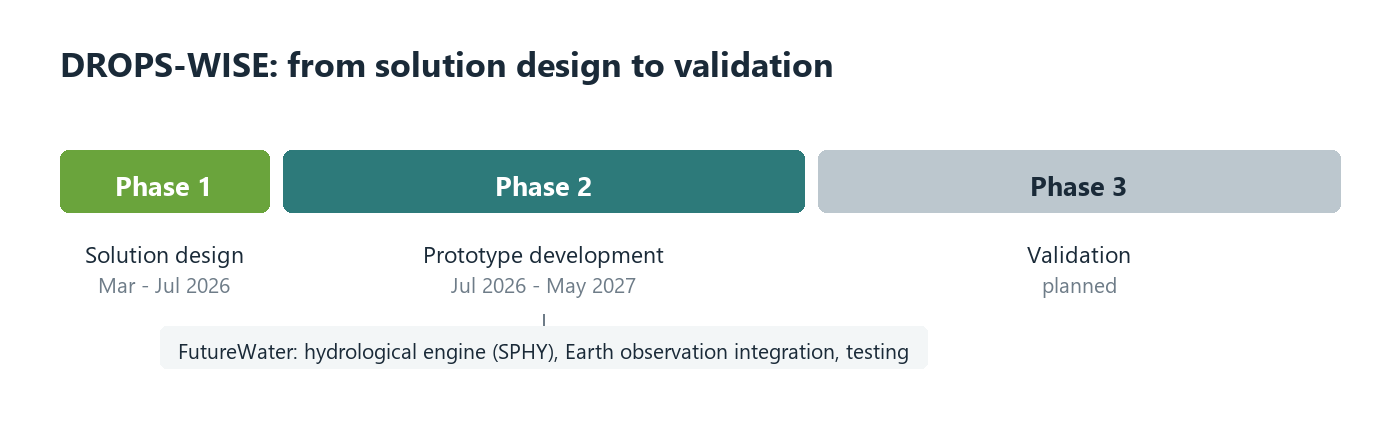
Through a user-friendly web interface and interoperable data services, DROPS-WISE will support operational decision-making, crisis management and longer-term planning for water authorities and other stakeholders. Designed with interoperability, data governance and scalability at its core, the solution aligns with European data standards and Copernicus services, contributing to more resilient, data-driven water management under increasing climate uncertainty.

DROPS-WISE is one of the five consortium selected under the PCP WISE innovation project. PCP WISE is a European innovation project in which public organizations and market parties from across Europe collaborate. The project focuses on developing a usable and applicable tool for water information, enabling water managers to respond better and faster to climate-related challenges. By intelligently combining satellite data with, for example, field measurements, meteorological and hydrological models, greater insight is gained into the dynamics of the aquatic vegetation system.

DROPS-WISE is formed by a consortium between FutureWater, Acacia Water, Nelen & Schuurmans, VITO, Technolution and ARUP. Futurewater is bringing its expertise in Hydrological Modelling and Analysis, Risk Assessment and Water Scarcity and Drought Management.

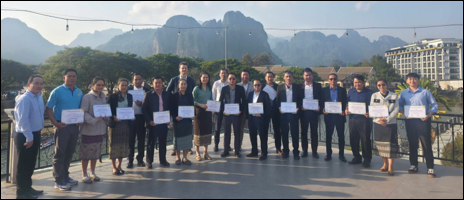
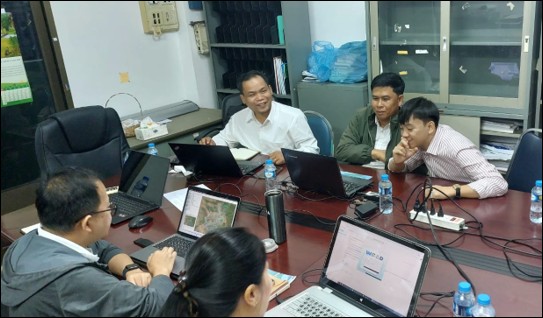
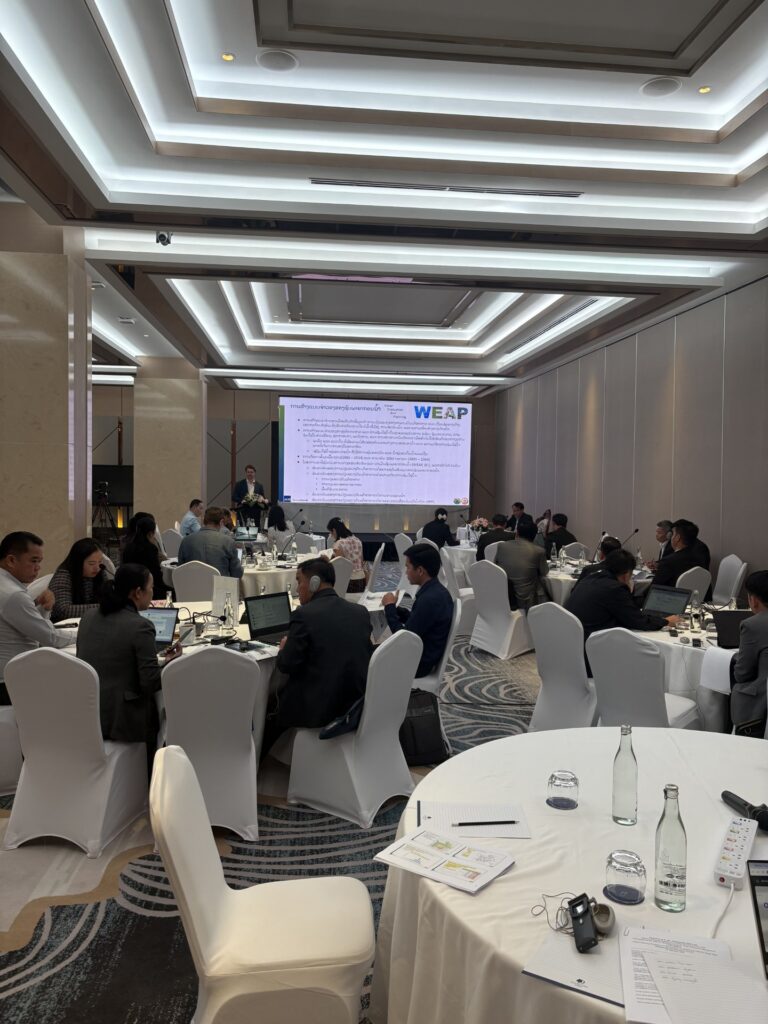
In February 2026, FutureWater supported the Climate Risk and Adaptation Assessment validation mission for Lao PDR under the Asian Development Bank’s Climate Adaptation Investment Planning Technical Assistance. As part of this mission, Brecht D’Haeyer and Tijmen Schults delivered and facilitated technical sessions during a validation workshop in Vientiane, focused on the Climate Risk and Adaptation Assessments for the Nam Xedon and Nam Neun river basins.

The workshop brought together relevant national stakeholders and external partners to review and validate the draft assessment results. Participants included representatives from the Department of Water Resources, Department of Meteorology and Hydrology, Department of Environment, Department of Irrigation, Department of Watershed Management, the Ministry of Finance, the Ministry of Health, academic institutions, and several development partners. In total, 49 participants joined the workshop.

The validation focused on three core components of the Climate Risk and Adaptation Assessment: climate risk mapping, WEAP-based climate impact modelling, and Nature-based Solutions opportunity mapping. These components provide the technical basis for understanding climate-related risks, assessing water allocation and demand sensitivities, and identifying spatial opportunities for adaptation measures in both basins.

During the workshop, FutureWater presented key findings on climate hazards, exposure, vulnerability, water availability and potential Nature-based Solutions. The sessions were designed to test the plausibility of the results, discuss uncertainties and limitations, and capture feedback from national experts and development partners. This validation step was important to ensure that the assessment reflects local knowledge and can support practical decision-making in the next phase of the CAIP process.

The workshop concluded with an initial discussion on adaptation recommendations for Nam Xedon and Nam Neun. These recommendations will help guide the development of the Climate Adaptation Investment Plan, with a focus on evidence-based, basin-level adaptation planning and investments that strengthen climate resilience in Lao PDR.

Training venue

In November, the annual SPHY Community Session brought together users of the Spatial Processes in HYdrology (SPHY) model. The session provided a platform to share model developments, methodological advances, and applied case studies across different contexts.

The annual SPHY Community Session opened with updates on the new SPHY version 3.1 presented by Tijmen Schults. Dr. Johannes Hunink reflected on the history of SPHY and its use in research-based consultancy, after which Amelia Fernández Rodríguez introduced the new SPHY QGIS 3 plugin, demonstrating how SPHY is now embedded and accessible in the latest version of QGIS. Researchers and practitioners from various institutes then presented their work using SPHY in different contexts. Dr. Faiz Mohammed shared an agent-based socio-hydrology approach to support sustainable and equitable water management investments, while Dr. Joris Eekhout discussed how future changes in irrigation water supply and demand may affect water security in a Mediterranean catchment. Pranisha Pokhrel presented her application of SPHY in the Karnali River Basin in Nepal, and the session concluded with a presentation by Tijmen Schults on simulating spring discharge within the Roadside Spring Protection project in Nepal.

The session reflected the growing and diverse SPHY user community and the importance of continued exchange between research and practice. We thank all speakers and participants for their contributions and engagement, which support the further development of the SPHY model. A next SPHY Community Session will be held in November 2026.

ADB is committed to supporting its developing member countries in scaling up climate action. As part of this commitment, ADB is implementing TA 10098-REG: Bridging the Gap between Climate Adaptation Planning and Financing, also known as the Climate Adaptation Investment Planning (CAIP) TA. The CAIP TA aims to enhance the capacity of developing member countries (DMCs), to identify climate adaptation investment priorities to catalyze financing for adaptation and resilience. The TA delivers three outputs: (i) climate adaptation investment plans developed; (ii) appraisal of climate adaptation projects improved; and (iii) regional knowledge on climate adaptation investment planning strengthened.

The CAIP TA applies a five-step process for climate adaptation investment planning: (i) reviewing country and sector context, including national development plans and strategies, climate policies including the National Adaptation Plan (NAP), Nationally Determined Contribution (NDC), or equivalent adaptation plans; (ii) undertaking more granular climate diagnostic for selected national adaptation priorities; (iii) prioritizing adaptation investments; (iv) linking with public financial management systems; and (v) identifying appropriate financing opportunities.  The CAIP TA brings together different relevant ministries, especially the finance and planning ministry, the respective sector ministry, and the environment ministry. In addition, the implementation process closely collaborates with relevant development partners active in the adaptation space in the country, the private sector, and civil society organizations.

FutureWater was engaged by ADB to develop the climate adaptation investment plans and underlying Climate Risk and Adaptation assessments (CRAs) for selected river basins in Lao PDR and Timor-Leste. Both the CRAs and the investment plans are approached from a multi-sector perspective and strongly adhere to IWRM principles. Water resources modelling (WEAP) is employed to relate water supply and demands in an integrated framework under different scenarios, in addition to extensive mapping of climate hazards, exposure and vulnerability across the study areas, making use of a combination of state-of-the-art global data and tools and locally-sourced information. The investment plans involve mapping and assessment of current and planned investments within the river basins, including nature-based solutions and green-gray infrastructure, followed by an identification of adaptation opportunities and subsequent prioritization. The results of the CAIP process for Lao PDR and Timor-Leste are expected to support the country’s national adaptation priorities into concrete, investment-ready plans and securing the necessary funding for their implementation.

We invite you to the SPHY Hydrological Model Webinar on 9 October 2025, from 10:00 to 11:00 CET. This event will showcase the latest developments in SPHY, including new tools, features, and workflows, and provide an interactive platform to ask your questions.

A New Era for SPHY

SPHY is undergoing a major transformation to become more powerful and user-friendly. Recent milestones include:

  • QGIS plugin: a redesigned interface that allows users to set up, run, and visualize SPHY entirely within QGIS.
  • SPHY version 3.1: new features such as bias correction for meteorological data, improved snowmelt routines, and more flexible simulation options.
  • New website and resources: updated manuals, tutorials, and datasets are now available at sphymodel.com.

These innovations make SPHY more accessible and relevant for a wide range of hydrological and water resources applications.

What to Expect at the Webinar

  • Tijmen Schults will introduce SPHY and its latest features.
  • Amelia Fernández Rodríguez will give a live demonstration of the new QGIS plugin.

This is the perfect opportunity to see SPHY in action and get direct input from the experts.

Who Should Attend

The webinar is open to hydrologists, water managers, GIS practitioners, researchers, students, and anyone interested in open-source hydrological modelling.

Practical Info & Registration

  • Date & Time: 9 October 2025, 10:00–11:00 CET
  • Format: Online webinar
  • Cost: Free
  • Register here

To further advance our hydrological model SPHY, we are proud to announce four major milestones for the SPHY modelling community. Since SPHY is widely used by FutureWater in capacity building programs, our goal has always been to make the model and its data as accessible and user-friendly as possible.

Until now, Graphical User Interfaces (GUIs) for SPHY were only available in QGIS for version 2.0. This project has upgraded those plugins to ensure full compatibility with the latest versions of SPHY, QGIS, and Python. The updated plugins also integrate new functionalities to handle cutting-edge data sources as model inputs. With these new QGIS plugins, running SPHY no longer requires programming skills—opening the door for a much broader audience to set up, run, and analyze hydrological simulations with ease.

1. Introducing the SPHY QGIS plugin

SPHY is now directly integrated into QGIS, allowing users to set up, run, and visualize SPHY simulations through an intuitive graphical interface. This plugin streamlines workflows, improves accessibility for new users, and enhances integration with geospatial datasets. Features include

  • Complete SPHY workflow integrated in QGIS
  • Streamlined preprocessing of model inputs
  • Intuitive, no-code interface
  • Results visualized directly in QGIS
  • Modular setup for diverse applications
  • Open-source and fully reproducible

2. New SPHY website

The new SPHY website offers easier navigation, updated documentation, and a central hub for resources, downloads, and training materials. Visit www.sphymodel.com to explore a fresh, modern platform for all SPHY matters.

3. SPHY model version 3.1 released

The latest SPHY release on Github introduces new features, performance improvements, and enhanced capabilities for hydrological and cryospheric modelling. This version builds on the robust foundations of previous releases, integrating feedback from the community and advancing the model’s flexibility and accuracy. It can be downloaded completely free and is open source. New in this version are:

  • Added bias-correction procedure for meteorological forcing
  • Increased flexibility and options for defining simulation periods
  • Enhanced snow melt calculation

4. Updated manuals, tutorials and datasets

Manuals of the new SPHY version and QGIS plugin are now available, as well as new datasets to make your model work. For the new QGIS plugin a video tutorial was made to explain all the ins and outs of the tool.

More to come soon!

These developments mark a significant step forward in making SPHY more accessible, powerful, and user-friendly for researchers, practitioners, and decision-makers worldwide. Soon we will organize a webinar to explain all the new features and later this year we plan on hosting a user day to discuss future model developments with the SPHY community.

Video

FutureWater, in collaboration with Utrecht University, has published Guidelines for Glacio-hydrological Modelling in High Mountain Asia. The guidelines report provides a structured approach for developing glacio-hydrological models in data-scarce mountain environments, building on both practical experience and scientific advances.

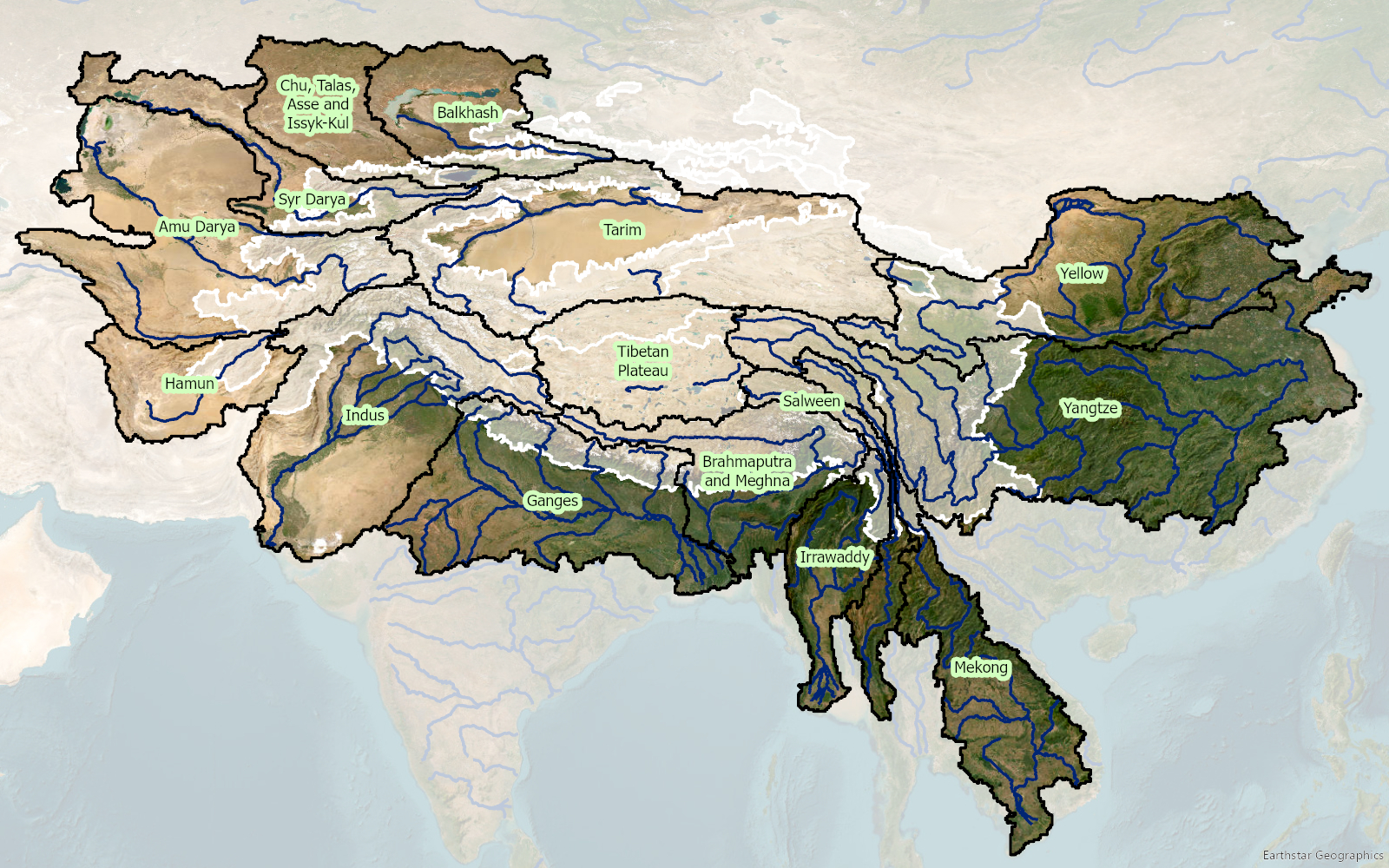
High Mountain Asia holds the world’s largest ice and snow reserves outside the polar regions and plays an important role as a water source for Asia’s major river systems, sustaining over a billion people. With changing glaciers and snow cover under global warming, water availability is shifting across seasons and risks of floods and droughts are intensifying. Understanding and modelling these dynamics is essential for managing future water resources. Focused on the Spatial Processes in Hydrology (SPHY) model, the guidelines presents best practices for model setup, calibration, and validation, offering stepwise procedures to support climate impact assessments and strengthen water resources management in glacier- and snow-dominated basins.

The guidelines were prepared as part of the project Development of a Glacio-Hydrological Model and Integrated Water Resources Management Plan for the Uttarakhand Subbasin, commissioned by the Swiss Agency for Development and Cooperation (SDC) under the Strengthening Climate Change Adaptation in Himalayas (SCA-Himalayas) program. Implemented between 2021 and 2023 by a consortium of FutureWater, Utrecht University, the University of Geneva, and the Energy and Resources Institute (TERI) in India. The project used the Bhagirathi Basin in northern India as a case study to illustrate the modelling approach.

On June 25, we celebrated the successful closure of the RoSPro project with a national workshop held in Nepal. The event brought together key stakeholders to reflect on the project’s positive outcomes, including improved spring water access, road resilience, and community engagement in water management.

A key highlight of the project was the Decision Support System (DSS) developed by FutureWater. This system integrated hydrological (as an outcome of the SPHY hydrological model), geospatial, and socioeconomic data into a user-friendly platform, enabling data-driven decisions for sustainable water management. Moreover, the system provides a simple Cost&Benefit Calculator to assist stakeholders in evaluating the potential of proposed management measures for mountain springs.

The workshop underscored the potential for scaling up the approach in other regions, using the DSS to guide future spring protection and water resource management efforts. We look forward to continue this work in the future!

An open access version of the DSS is available here

Cover picture of the DSS