
Month: December 2015
22 December 2015
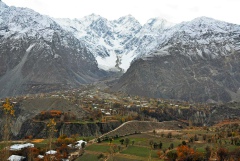
Himalayan snowfall underestimated
The amount of snow and rain in the Himalaya is about twice as high as commonly assumed. Research in the Indus basin by scientists from Utrecht University, FutureWater and the International Centre for Integrated Mountain Development (ICIMOD) led to the discovery. These findings have important bearing for water management and climate change impact assessments. The...
22 December 2015
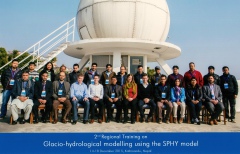
Second regional training on glacio-hydrological modeling using the SPHY model in Kathmandu, Nepal
The Hindu Kush-Himalayan region is highly dynamic as there are many socio-economic and environmental drivers at play, including climate change. The impacts of these changes challenge the resilience of natural and human capacities and environments in the region. Recent studies have shown that the Himalayan region and the downstream areas that depend on its water...
9 December 2015
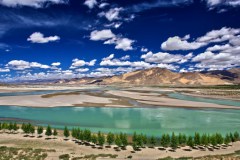
Launch of The Himalayan Climate and Water Atlas at COP21
On 11 December the HKH Water Atlas (‘The Himalayan Climate and Water Atlas: Impact of Climate Change on Water Resources in Five of Asia’s Major River Basins’) will be launched at the 2015 United Nations Climate Change Conference (COP21). The conference is held in Le Bourget, Paris, France from 29 November to 11 December. The...

9 December 2015
FutureWater and partners kick off IMPREX project
To advance the state-of–the-art in operational hydro-meteorological forecasting, a newly funded project called IMPREX has recently been launched. IMPREX stands for: IMproving PRedictions and management of hydrological EXtremes. The project, awarded €7.9 million over 4 years by the European Commission, aims to improve society’s ability to anticipate and respond to future hydrological extreme events in...
7 December 2015
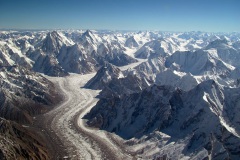
Open webinar on the impact of climate change on the Asian Water Towers
The high mountain ranges in Asia are also called the Asian Water Towers, providing water resources for the densely populated downstream areas, where millions of people depend on the water coming from upstream. The water generated in the high Asian mountains feeds into the world’s largest irrigation schemes and reservoirs. Downstream water demands are high,...
