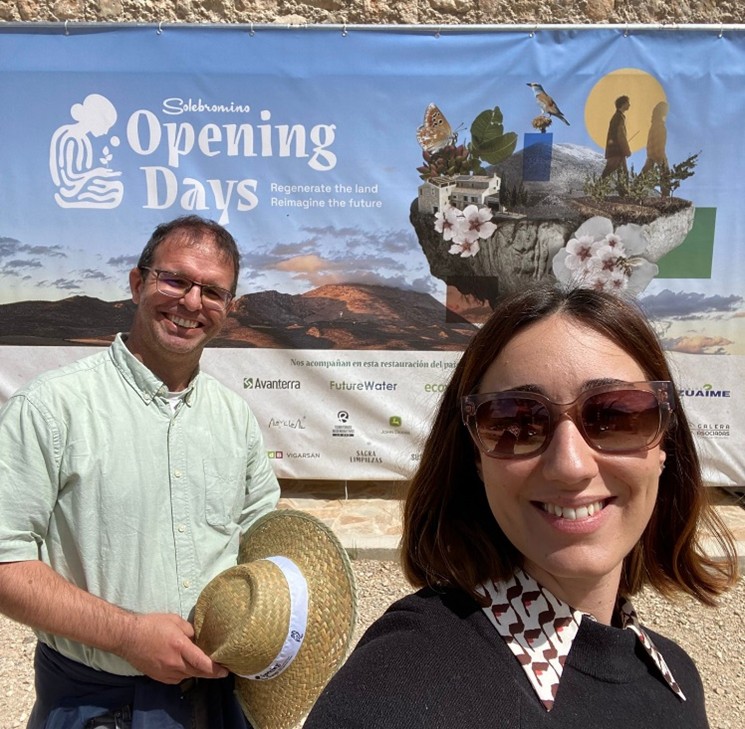
On 6 May, FutureWater played a prominent role at the “Solebromino Opening Days: Regenerate the land, Reimagine the future” event (4–10 May 2026, Huéscar – Spain), which brought together a wide range of activities centred on regenerative agriculture and the 4-returns approach as a driver of change and rural development in the Granada highlands region.
As part of its collaboration with Solebromino, FutureWater led a practical field workshop and took part in a panel discussion with other experts and stakeholders.
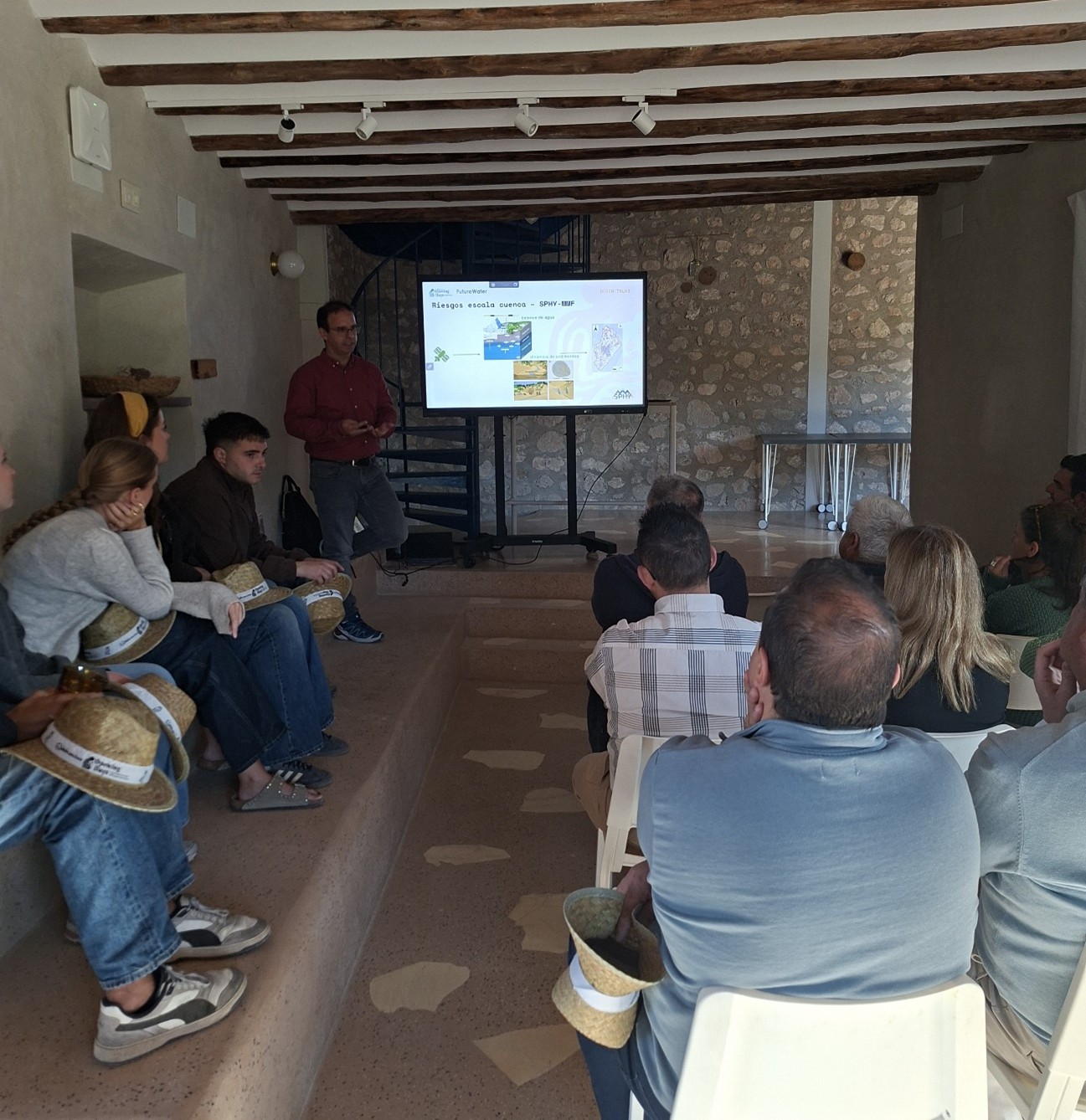
During the field workshop held at Solebromino’s Cubero farm, the FutureWater team highlighted the importance of developing a “Water Adaptation and Resilience Plan” to address this challenge. This plan must be built on four strong pillars:
- a unified data management model,
- a strong toolbox of modeling capabilities,
- a robust training and capacity building program, and
- a field monitoring and sensor system to measure the “health” and progress of the farm. These four pillars form the basis for a system capable of integrating the traditional knowledge of our environment with the most advanced science and technology.
During the practical session, our colleagues Sergio Contreras and Amelia Fernández demonstrated how, through the use of public data, we can improve the productivity of our farms by: a) identifying potential and actual risks of fertile soil loss, b) the precise identification of opportunities for water capture and harvesting, and c) the assessment of how and when to implement regenerative practices to improve our farm’s resilience to extreme droughts and heavy rainfall.
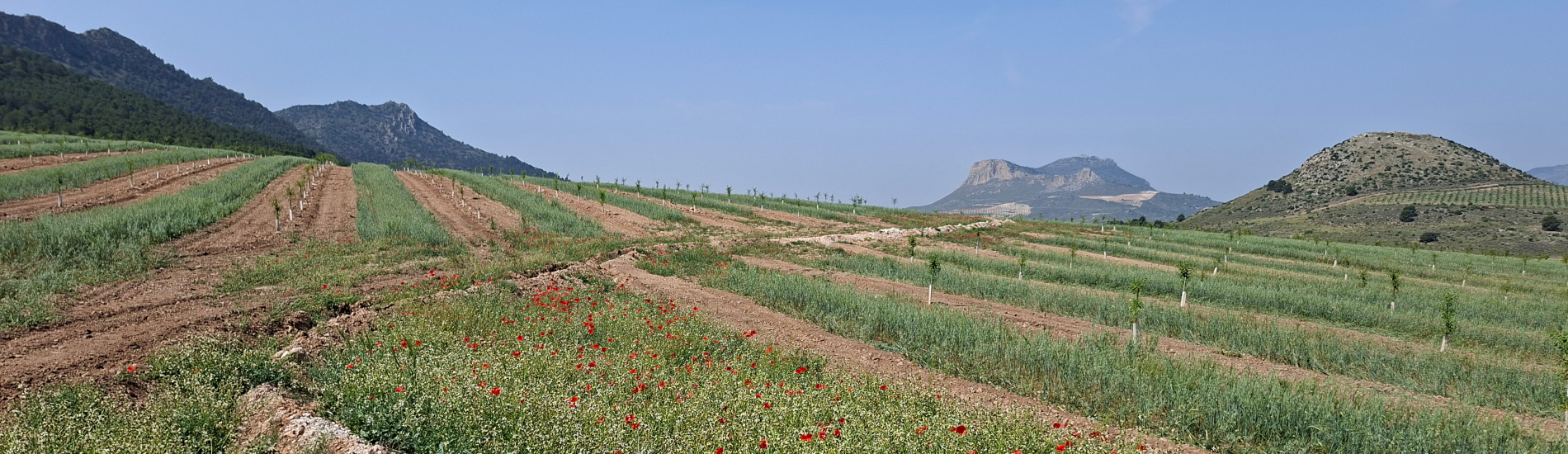
The practical workshop concluded with a field visit to the Cubero farm, where all attendees were able to check the benefits of several regenerative water-related practices already implemented by Solebromino, including infiltration ditches and ponds, stone walls, biodiversity ponds, revegetation strips in sensitive and degraded areas, and the maintenance of island-forests.
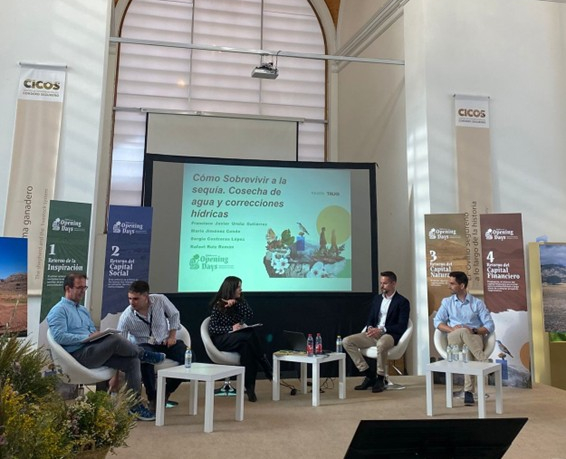
During the RegenTalks entitled “How to survive a drought. Water harvesting and water management practices”, held in the iconic CICOS building in Huéscar, Sergio shared with everyone the FutureWater’s international vision and experience with water and land conservation practices, nature-based solutions, and Payment for Ecosystem Systems as useful tools to value the conservation and restoration practices. Sergio highlighted the main challenges and opportunities facing farmers who wish to commit to more resilient and productive agro-ecosystems, such as those arising from climate change, the degradation of productive land, the loss of development opportunities and human capital in rural areas, the retention of qualified technicians, and administrative and institutional barriers, many of which stem from a lack of alignment between development and environmental policies.
We thank Solebromino for their trust in the FutureWater team. We hope this partnership continues to gain the momentum needed to demonstrate that rain-fed agriculture in this region can be viable, competitive and scalable.
Interested in making a difference, in the transformation? We can support you; write to us at s.contreras@futurewater.es