
Agricultural production in Burkina Faso is constrained by degraded soils, erratic rainfall and limited water management. Smallholder farmers depend on rainfed production, which leaves income highly seasonal and arable land idle through the dry season. Manual practices such as digging Zaï pits are labour-intensive and limit the area that can be cultivated, while affordable irrigation technologies and the services to maintain them are scarce in rural areas.

Terre365 is an Impact Cluster financed by the Netherlands Enterprise Agency (RVO) and implemented by a consortium led by Stichting Practica with Holland Greentech, Techforce, CSF and FutureWater. Over three years, including an inception phase, the consortium introduces an integrated package of climate-smart technologies: the Zainer machine that mechanises the traditional Zaï technique, efficient irrigation systems, organic soil improvement, and digital irrigation advice.
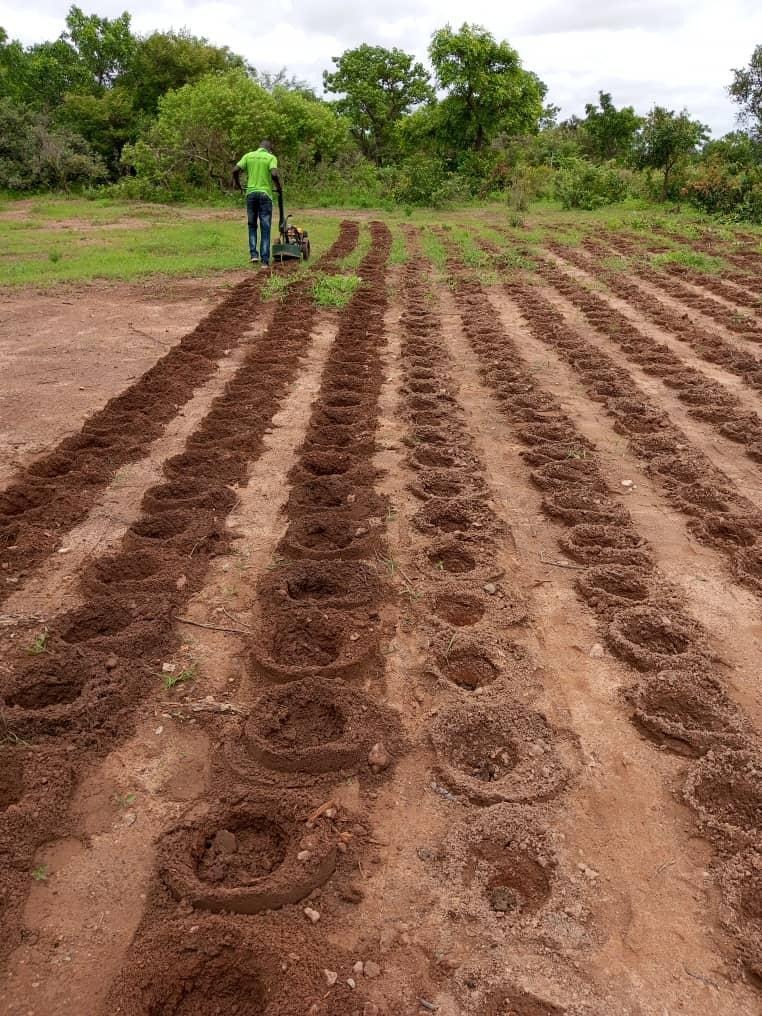
A field of red soil dug into long rows of evenly spaced Zai planting pits by the Zainer machine, with a single operator working in the distance.
The Zainer mechanises the traditional Zaï technique, digging evenly spaced pits that capture rainwater and concentrate soil fertility over a far larger area than manual digging allows.

FutureWater contributes Croptimal, its digital irrigation advisory service, which combines satellite data, weather forecasts and local calibration to optimise water use and crop productivity. FutureWater adapts the service to the Burkinabé context, validates it against field conditions at the demonstration sites, and extends it with a WhatsApp channel and translation into Mooré. It also tracks digital advisory use, water productivity and technical performance for the project’s monitoring framework.
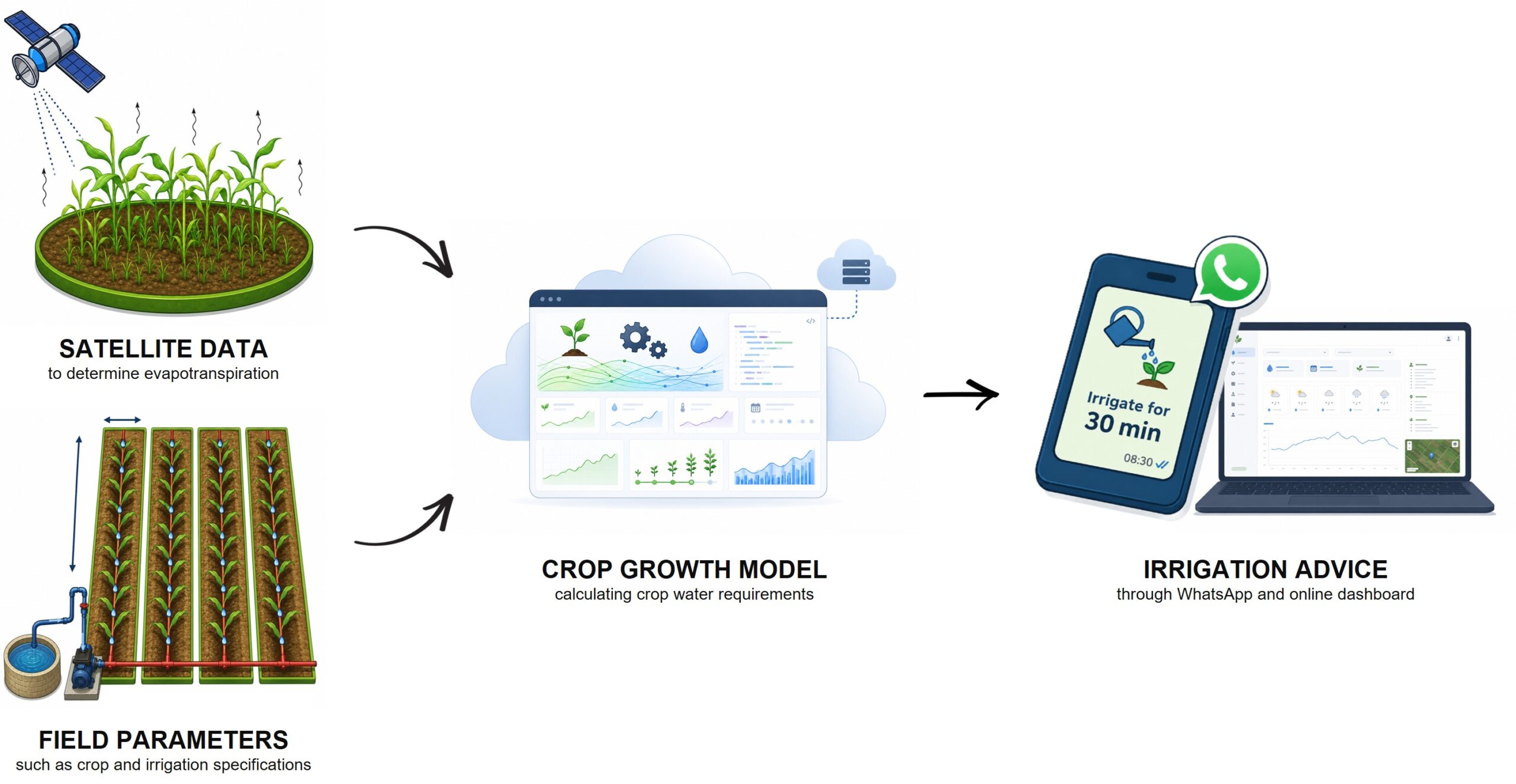
Croptimal combines crop, field and irrigation characteristics with weather station and satellite data, and sends the resulting irrigation advice to farmers as WhatsApp messages.

Knowledge transfer runs throughout. FutureWater develops training materials on the Croptimal app and irrigation practice, alongside partner training on manufacturing, soil management and good agricultural practice. Demonstrations are hosted on existing farms rather than dedicated project fields, so that lead farmers, extension officers and the youth service providers trained by the project carry the technologies into normal use once support ends.

Rainwater harvesting aims at reaching those people not having access to sufficient and good quality fresh water. They often live in rural areas where other means of water supply are not sufficient or feasible. Within these areas groundwater is not accessible (at technically and/or financially unreachable depths) or potable (due to water quality issues, like fluoride or arsenic contamination) and other surface water (like permanent rivers, lakes and springs) are not available or sufficient to meet basic water needs.

Identifying areas where rainwater harvesting is a feasible solution is one of the aims of the RAIN Foundation. This information on the potential of rainwater harvesting is essential to guide organizations in their implementation efforts, and is at the same time important as a strong lobby tool towards national and international governments.

Besides the current potential, a future oriented approach is required as changes in climate and socio-economic development would alter the need and the potentials for rainwater harvesting. In the years to come, temperatures will rise worldwide, but the weather will also become more extreme. Both prolonged droughts and floods, whether or not combined with sea level rise, are causing a shortage of clean drinking water.

In 2010 FutureWater and Deltares were asked by RAIN Foundation to develop maps indicating the potential for rainwater harvesting (RWH) for Mali, Senegal and Burkina Faso. FutureWater and Deltares used the same approach, but with a slightly different set of input parameters. This report describes the recommended approach to develop maps showing the potential for rainwater harvesting.

The interactive maps can be found here: Rainwater Harvesting Potential in Mali, Senegal & Burkina Faso