Most researchers use a large language model as a better search engine: ask a question, get an answer that is just about acceptable, then spend a considerable amount of time editing it up to standard. The next day a similar problem arises and the process starts from scratch. What changes this is not a better prompt, but giving the model a different job: not answering questions about your work, but carrying out a defined part of it. That happens in your own folders, on your own data, within rules you set and checks you can verify yourself, that run every time. That is the difference between an answer and a result you can use in your workflow.
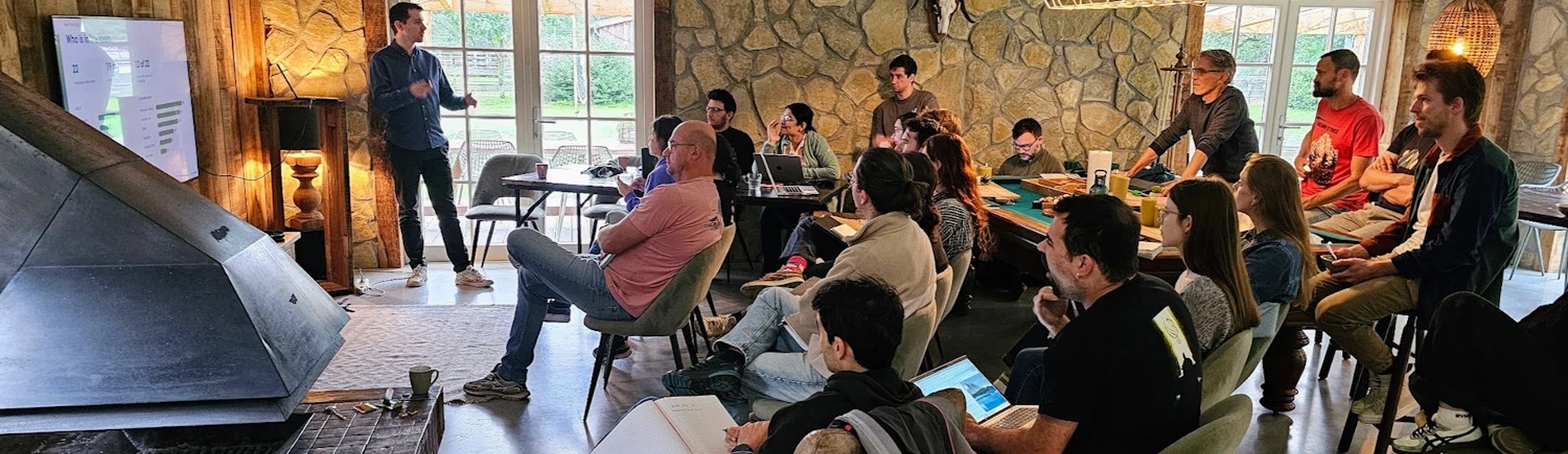
This is what FutureWater taught researchers of the Kops group at the Hubrecht Institute on 17 September, in a tailored half-day workshop during the group’s retreat. Every participant worked on a task from their own research. One researcher built an imaging plugin to speed up image analysis. The group’s microscope coordinator set up a step-by-step flow for handling microscope errors, so colleagues can solve common problems themselves. Others worked on a literature review that screens papers and checks every source it cites, a manuscript written to the conventions of their target journal, and a lab protocol turned into a project plan.
Afterwards, all 14 participants who filled in the feedback form said they are likely to use Claude in their own work in the coming month, 12 of them very likely. Read more about the training on our project page.