
Author: Amelia Fernandez
28 May 2026
FutureWater at the SOS-Water Project Consortium Meeting at Milano
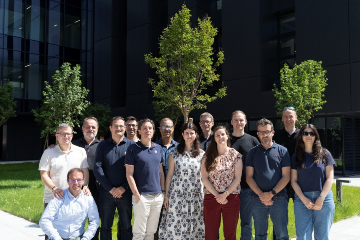
Held in Milano from 20 to 22 May 2026, FutureWater took part in the SOS-Water project consortium meeting. Forty-four months into the project, and close to its end in September 2026, the Milano General Assembly meeting reviewed the progress and results derived from the application of the Safe Operating Space for Water in the project...
26 May 2026
How Can We Survive Drought Through Regenerative Rain-fed Agriculture?
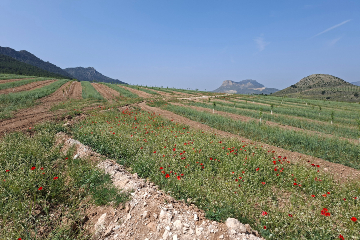
On 6 May, FutureWater played a prominent role at the “Solebromino Opening Days: Regenerate the land, Reimagine the future” event (4–10 May 2026, Huéscar – Spain), which brought together a wide range of activities centred on regenerative agriculture and the 4-returns approach as a driver of change and rural development in the Granada highlands region....
1 April 2026
Successful Provision of a Comprehensive Drought Forecasting Model for Somalia/Somaliland
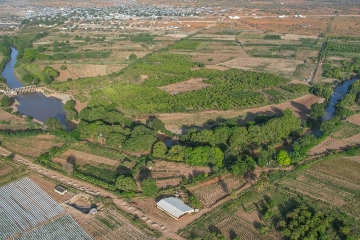
This week marked the culmination of a significant milestone with the completion of handover sessions to key stakeholders—the Somali Disaster Management Agency (SODMA) and Somaliland’s National Disaster Preparedness and Food Reserve Authority (NADFOR). These sessions formally transferred ownership of the drought forecasting model, concluding a long-term initiative commissioned by the World Food Programme (WFP) and...
15 October 2025
The MegaWat Project Advances Adaptation to Megadroughts in European Water Towers
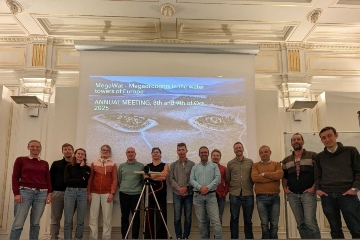
On October 8 and 9, 2025, the 2nd Annual Meeting of the MegaWat project was held at the Institute of Science and Technology Austria (Klosterneuburg). MegaWat is an international initiative dedicated to assessing the impact of megadroughts on European high mountain regions. FutureWater, which is leading the Work Package on Resilience and Adaptation, presented progress...

10 September 2025
SPHY Enters a New Era: QGIS Plugin, Website, Model v3.1 & Resources
To further advance our hydrological model SPHY, we are proud to announce four major milestones for the SPHY modelling community. Since SPHY is widely used by FutureWater in capacity building programs, our goal has always been to make the model and its data as accessible and user-friendly as possible. Until now, Graphical User Interfaces (GUIs)...
25 June 2025
RoSPro Project Closure: National Workshop Highlights Positive Outcomes
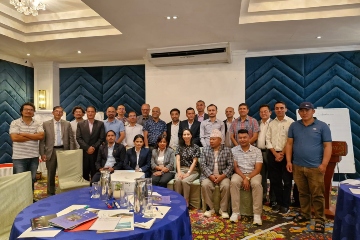
On June 25, we celebrated the successful closure of the RoSPro project with a national workshop held in Nepal. The event brought together key stakeholders to reflect on the project’s positive outcomes, including improved spring water access, road resilience, and community engagement in water management. A key highlight of the project was the Decision Support...
13 May 2025
FutureWater at the EGU General Assembly 2025: Showcasing Advances in Snow Water Equivalent Downscaling
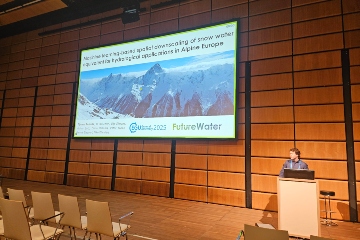
The European Geoscience Union (EGU) General Assembly, held from April 28th to May 4th, 2025, at the Austria Centre Vienna, brought together scientists and researchers from around the globe. FutureWater was proud to be a part of this event, presenting its latest work under the SOS-water EU Horizon project, which aims to define the Safe...

7 February 2025
FutureWater at Colombia Water Platform Meeting
On the 28th of January our colleague Evelyn Aparicio Medrano as a panelist during the Colombia Water Platform Meeting. During the event, organized by Partners for Water, we shared our experience of working in Colombia. Particularly we guided the discussion under pilar 2 which refers to supporting and stimulating project implementation and continuation. FutureWater is...
22 January 2025
Highlights: International Soil and Water Forum 2024
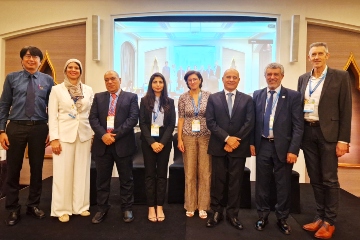
The International Soil and Water Forum, organised by the Food and Agriculture Organisation of the United Nations, brought together over 500 participants from 55+ countries in Bangkok in December 2024. Shared experiences under the four thematic areas: i) managing water scarcity, ii) reversing land degradation and boosting land restoration, iii) sustainable soil management and iv)...
10 January 2025
World Bank’s Drought Risk and Resilience Assessment Methodology Includes NbS Dimension Provided by FutureWater
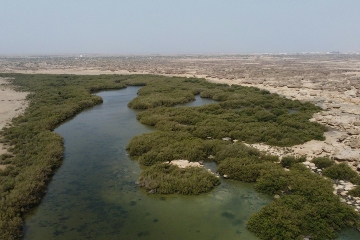
The recently published World Bank’s Drought Risk and Resilience Assessment Methodology (DRRA) is a framework for action to support governments proactively address drought risks. Drawing on international best practice in drought management, it outlines practical measures to build resilience at every stage of the drought cycle. With this tool, governments can create a community of...
